June 12, 2026
Propane Leak Response Gaps Are Costing Operators More Than They Think

Recent propane leak incidents across the U.S. have exposed a pattern that experienced operators will recognize immediately: the issue is rarely the leak itself, but how the response unfolds in the first 30–90 minutes. Delays in dispatch clarity, incomplete field information, and inconsistent emergency coordination are turning manageable events into high-cost incidents. For propane businesses, this is not just a safety concern; it is a direct exposure to liability, insurance escalation, and reputational damage. The operational breakdowns seen in recent cases highlight where systems, not people, are failing under pressure.
Where Response Breakdowns Are Actually Happening
In most recent leak scenarios, the initial report is vague: odor complaints, “possible gas smell,” or third-party calls from neighbors or passersby. The first failure point is intake. Dispatch teams often lack structured questioning protocols, which leads to incomplete hazard classification before a truck is even assigned.
From there, field response is frequently delayed, not by distance, but by uncertainty. Drivers arrive without full knowledge of the context, tank size, system layout, or whether emergency services are already on-site. That uncertainty slows decision making at the scene and increases the likelihood of delayed shutoff, poor perimeter control, or unnecessary escalation.
Post-incident reviews consistently show that the timeline between arrival and decisive action is where risk compounds. Operators who cannot compress that window are the ones absorbing the largest losses.
The Hidden Cost of Coordination Gaps with First Responders
Fire departments and local emergency services are often first on scene, but coordination with propane providers remains inconsistent. In many cases, responders lack clear guidance on tank locations, shutoff procedures, or system pressures. In others, propane companies are not notified early enough to provide technical support.
This disconnect creates operational and financial consequences. Emergency personnel may default to broad evacuations or extended road closures, increasing public disruption and media exposure. At the same time, improper handling of propane systems by untrained responders can unintentionally escalate the situation.
From a business standpoint, insurers are increasingly focused on response quality. Documentation of communication timelines, coordination efforts, and decision making is now part of claim evaluation. Poor coordination does not just extend the incident, it raises the cost of recovery and future premiums.
Staffing and Training Gaps Are Slowing Decision Making
Even well run operations are feeling the impact of workforce constraints. Newer technicians often lack real world leak response experience, and without clear escalation thresholds, hesitation becomes common. That hesitation, whether waiting for confirmation or second-guessing next steps, adds critical minutes.
Dispatch teams face a similar issue. Too often, dispatch is treated as administrative rather than operational. In a leak scenario, dispatch is effectively the command center. If they cannot assess severity quickly, prioritize correctly, and communicate clearly across all parties, the response weakens from the start.
Traditional training programs emphasize compliance and procedures, but many fall short in preparing teams for incomplete information and real-time pressure. That gap is showing up more frequently in incident timelines.
What Operators Should Change Immediately
1. Standardize emergency intake protocols. Every leak-related call should follow a strict questioning framework that captures location specifics, tank type, odor intensity, visible conditions, and ignition risks. This ensures that dispatch decisions are based on usable data, not just assumptions.
2. Equip field teams with real time site intelligence. Drivers should have mobile access to tank details, customer history, and system layouts before their arrival. This reduces hesitation and allows for faster, more confident action on site.
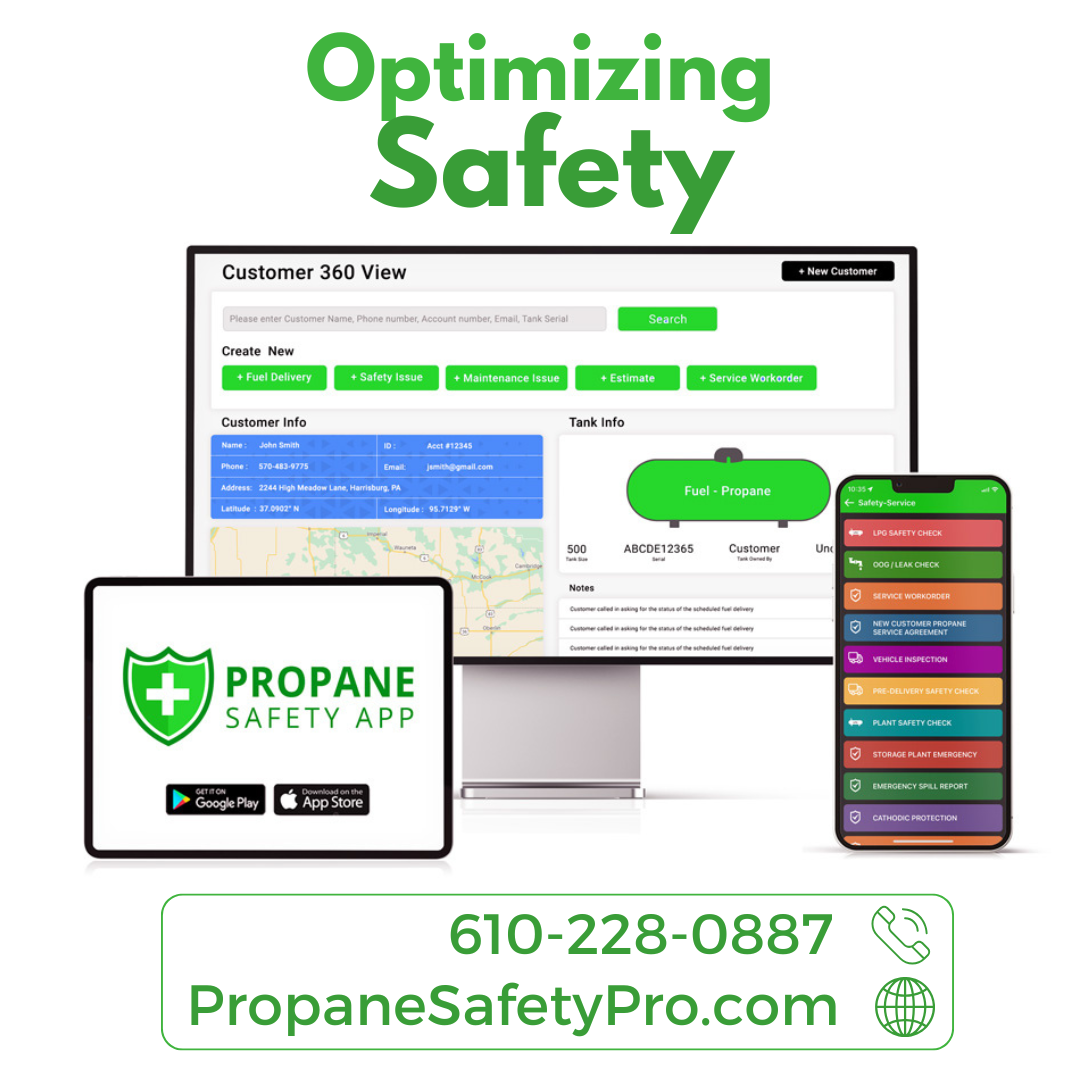
3. Integrate digital safety workflows into response operations. Tools like Propane Safety Pro are becoming increasingly relevant here. By digitizing safety inspections, documenting system conditions, and centralizing compliance records, operators can provide field teams and emergency responders with accurate, up-to-date information when it matters most. This also creates a defensible record of actions taken before, during, and after an incident.
4. Formalize coordination with local responders. Proactive engagement with fire departments – sharing tank maps, shutoff procedures, and contact protocols – reduces confusion during live incidents. Joint drills or pre-incident planning sessions can significantly improve response alignment.
5. Train for decision speed under pressure. Scenario-based drills that simulate incomplete information and time constraints help teams build judgment, not just procedural knowledge. The goal is faster, more confident decision making in real conditions.
Business Implications
Leak incidents are not necessarily increasing in frequency, but they are receiving greater scrutiny. Response performance is now a defining factor in liability exposure, insurance outcomes, and customer trust. Operators who treat emergency response as a system, supported by clear protocols, trained personnel, and digital tools, will be better positioned to control both risk and cost.
The industry already understands propane systems. The challenge is execution under pressure. Closing that gap is one of the most immediate and practical ways to strengthen safety performance and protect the long-term health of the business.