June 12, 2026
Propane Industry Lawsuits Highlight a Growing Risk
Recent propane-related incidents across the United States are drawing increased legal attention, including high dollar lawsuits that could reshape how small propane companies think about safety documentation and field operations.
Rising Legal Pressure Around Propane Incidents
One of the most closely watched cases involves a $100 million lawsuit filed after a residential propane explosion in Michigan, where plaintiffs allege negligence tied to a suspected leak that caused severe injuries.
While each incident has its own circumstances, the broader trend is clear: propane-related accidents are increasingly being examined through a legal lens that goes far beyond the immediate emergency. Fire investigations, insurance claims, and lawsuits often focus on one central question – whether the company can clearly prove it followed all required safety procedures.
The Documentation Gap That Creates Liability
In many propane operations, technicians may complete inspections, leak checks, and maintenance correctly in the field. The problem often comes later, when those actions are recorded inconsistently or not documented in a way that can be independently verified. That gap becomes critical in disputes. In legal and insurance reviews, incomplete records can weaken a company’s defense, even if proper work was actually performed. Handwritten logs, delayed data entry, or missing inspection details are frequently the weak points that attorneys and investigators focus on.
Why Paper-Based Systems Are Falling Behind
The industry is now facing higher expectations for traceability. Regulators and insurers increasingly want clear proof of when work was done, who performed it, and what condition the equipment was in at the time. That shift is pushing many propane companies away from paper-based processes toward digital field documentation systems that capture information in real time.
How Digital Field Documentation Is Changing Safety Compliance
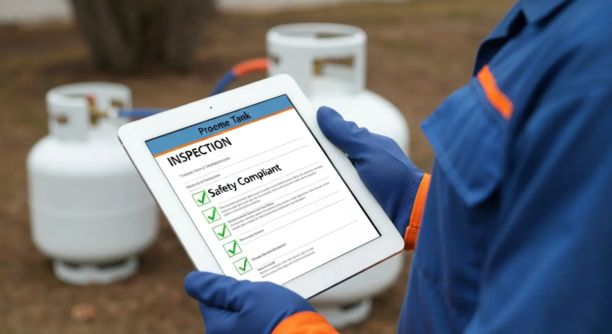
One tool being adopted across parts of the propane industry is TankSpotter, a mobile field operations platform designed to document inspections and service work as it happens in the field. Instead of relying on handwritten notes or after-the-fact reporting, technicians can record safety checks directly from a mobile device. Each entry can include photos, timestamps, location data, and inspection details, thereby creating a more complete and verifiable service history. The value for propane companies is not just operational efficiency. It’s the ability to produce a clear, time-stamped record of safety activity if an incident ever leads to an audit, insurance review, or legal claim.
The Real Risk for Small Propane Businesses
For family-owned and regional propane companies, the financial exposure from a single incident can extend far beyond just the needed repairs or immediate response costs. Lawsuits, insurance cost increases, and reputational damage can all affect operations for years to come. That reality is pushing more propane retailers to treat documentation as a core part of risk management – not just an administrative task.
Final Thoughts
Propane-related incidents are increasingly leading to high-value lawsuits where documentation plays a central role. Even when safety procedures are followed, missing or unclear records can create serious liability exposure. User-friendly digital field documentation tools like TankSpotter are becoming an important way for companies to strengthen compliance, reduce gaps in reporting, and protect themselves with verifiable service records.
Safety has always been central to propane operations, but the definition of “being safe” is expanding. Today, it’s not enough to simply perform the work correctly in the field; companies must also be able to prove it with clear, consistent, and time-stamped documentation. For propane businesses operating in a higher-risk legal environment, strong digital recordkeeping is quickly becoming as important as the safety procedures themselves.