
What Propane Companies Possess That Fuel Startups Don’t
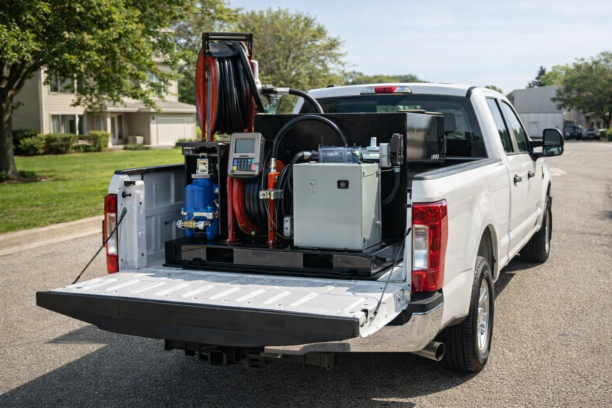
Every summer, the same problem shows up across propane operations. Trucks sit idle more often. Drivers lose hours. Assets that were pushed hard all winter suddenly have nothing urgent to do. At the same time, gasoline and diesel demand spikes for fleets, construction sites, marinas, municipalities, and convenience-driven residential customers. Startups have noticed this gap and rushed into on-demand fuel delivery. What they lack, however, is what propane companies already have in place.
The on-demand fuel delivery opportunity looks familiar on the surface. Customers want fuel brought to them instead of sending vehicles or equipment offsite. The logistics resemble what DoorDash, Uber Eats, and Amazon perfected in other sectors: fast ordering, precise routing, real-time visibility, and reliable execution. The difference is that fuel is regulated, hazardous, and unforgiving. This is where propane operators hold a structural advantage that startups cannot easily replicate.
Propane companies already operate route-based delivery businesses under hazmat rules. They manage DOT compliance, driver qualification, equipment inspections, and customer safety expectations every day. Startups often underestimate how much experience it takes to move fuel legally and safely. Propane drivers are trained to work around tanks, engines, job sites, and customers who expect professionalism. That trust matters. Fleets and municipalities are far more comfortable buying fuel from companies that have delivered energy safely for decades than from a newcomer with limited field history.
Operational overlap is another reason propane companies are uniquely positioned. The same routing logic used for propane can be adapted to gasoline and diesel with the right tools. Trucks, yards, dispatch staff, and driver management systems already exist. In many cases, incremental investment is far lower than what a startup must spend to build everything from scratch. The counterseasonal timing makes the case stronger. Propane demand naturally softens in late spring, summer, and early fall, precisely when on-demand gasoline and diesel demand accelerates. Keeping trucks and drivers productive year-round improves asset utilization and stabilizes revenue.
The market itself is not theoretical. Industry analysts estimate on-demand fuel delivery to be a multi-billion-dollar opportunity with double-digit growth, driven by fleet electrification complexity, tighter labor schedules, and rising downtime costs. Local markets matter. Once a provider locks in fleet contracts, marina relationships, or municipal accounts, switching costs rise. Early movers gain durable advantages because fuel delivery is operationally sticky and trust-based. Waiting too long often means entering a market already spoken for.
Many propane operators assume their existing dispatch software can handle this expansion. That assumption is understandable but flawed. Traditional propane systems were designed for forecasted, recurring deliveries, degree-day planning, and back-office optimization. They work well for predictable routes and pre-scheduled drops.
On-demand fuel delivery is different. Orders are customer-initiated, often mobile, time-sensitive, and require real-time visibility. Customers expect live tracking, automated payments, instant receipts, and rapid confirmation. Dispatch needs dynamic routing that adjusts continuously, not overnight batch planning. Legacy systems were never built for that environment, no matter how well they handle propane billing.
This gap forces operators to choose a path to market. Some turn to franchise models that promise speed and brand recognition. These often come with high upfront fees, ongoing royalties, and reduced control over pricing, customer data, and expansion decisions. Margins compress as volume grows, and operators become tenants inside someone else’s system. Others choose modern SaaS or white-label platforms that let them retain their brand, customers, pricing authority, and data. Fixed software costs replace revenue sharing, and the business scales without surrendering control.
This is where purpose-built platforms such as BlinkFuel fit logically into the picture. The appeal is not hype; it is alignment. A system designed specifically for on-demand fuel delivery, with real-time ordering, routing, and payments, complements what propane companies already do well. It fills the technology gap without rewriting the business model or handing it over to a franchise.
The window of opportunity is wide open for propane retailers right now. Startups are moving quickly, but they are still capital-heavy, inexperienced in compliance, and dependent on growth to survive. Propane companies already have the trucks, drivers, permits, customer relationships, and operational discipline to move forward in this regard. Independence matters in fuel delivery because margins, trust, and local control decide long-term winners. Pairing those existing strengths with modern, purpose-built platforms is not a leap. It is the rational next step for operators who want year-round utilization without giving away the business they spent decades building.