June 19, 2026
Wayne County, PA Explosion Highlights Why Drivers Are a Propane Company’s First Line of Defense
Tragic Incident Serves as a Powerful Reminder About Daily Safety Vigilance
A recent house explosion in Wayne County, Pennsylvania, left three people injured and destroyed multiple homes, drawing attention to the critical role propane safety plays at every customer location. According to preliminary findings from investigators, the explosion may have been linked to a leaking 100-pound propane cylinder outside the residence.
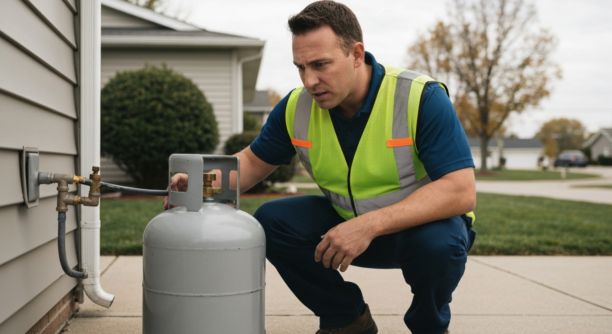
While the investigation remains ongoing, the incident is a sobering reminder that even a single equipment issue can have devastating consequences when a gas leak goes undetected. For propane companies, the event reinforces an important reality: drivers are not only responsible for delivering fuel. They are often the last trained professional to observe a propane system before a problem develops.
Small Observations Can Prevent Major Incidents
Every propane delivery creates an opportunity to identify potential safety concerns. Drivers routinely visit customer locations, inspect tanks and cylinders, and interact with homeowners who may not recognize warning signs of a developing problem. During these visits, seemingly minor observations can make a significant difference. A cylinder showing signs of excessive corrosion, damaged fittings, an improperly positioned regulator, or evidence of tampering may not appear urgent at first glance. However, identifying and reporting those issues early can prevent situations from escalating into emergencies. The Wayne County incident serves as a reminder that propane safety is often built on a series of small decisions and observations that are made long before an accident occurs.
Deliveries Are Also Safety Inspections
Many propane companies emphasize delivery efficiency, route optimization, and customer service. While these priorities are important, safety must remain the foundation of every successful operation. Each stop should be viewed as more than a fuel delivery. It is also a prime opportunity to evaluate the condition of the propane system and identify anything that appears unusual.
Experienced drivers often develop a strong awareness of what looks normal and what does not. That awareness can include noticing damaged cylinders, improper appliance installations, signs of unauthorized modifications, or customer concerns that warrant further investigation. When drivers trust their training and act on those observations, they become one of the most effective safety resources a company has.
Creating a Culture Where Reporting Is Encouraged
One of the biggest challenges in any safety program is ensuring that employees feel empowered to report concerns immediately. Drivers should never feel pressured to overlook a potential issue in order to stay on schedule. Companies with strong safety cultures make it clear that reporting hazards is always the right decision, even if it temporarily delays a delivery or requires additional follow-up.
Clear communication channels are essential. Drivers need a straightforward process for escalating concerns, documenting observations, and requesting additional inspections when necessary. The faster a concern reaches the appropriate personnel, the faster corrective action can be taken.
Training Keeps Safety Skills Sharp
Safety awareness is not a one-time lesson. It requires ongoing reinforcement. Regular refresher training helps drivers stay current on inspection procedures, leak indicators, cylinder condition requirements, and evolving safety standards. Real-world incidents like the Wayne County explosion can be valuable training tools because they demonstrate how quickly a situation can escalate when equipment fails or leaks occur. Team safety meetings that review recent industry incidents often generate productive discussions about inspection practices and field observations. These conversations help reinforce the importance of maintaining vigilance at every stop.
The Cost of Missing a Problem Is Too High
The human impact of an explosion is always the greatest concern. Property loss, injuries, and deaths are not only disruptive to the families and communities affected by them; they are usually devastating.
For propane businesses, the consequences extend further. Serious incidents can result in litigation, regulatory scrutiny, increased insurance costs, and long-term reputational damage. Years of trust can be affected by a single preventable event. That is why proactive safety measures remain one of the most valuable investments a propane company can make.
Safety Leadership Starts in the Field
Many discussions about propane safety focus on management, policies, and compliance programs. While those elements are important, safety often begins in the field with the people who visit customer locations every day. Drivers have a unique perspective that cannot be replicated by office staff or technology alone. They see the equipment, the environment, and the conditions that may signal a developing problem. When companies provide the proper training, support, and authority to act on highlighted concerns, drivers become far more than delivery professionals; they become frontline safety leaders.
A Reminder for Every Propane Operation
The Wayne County explosion remains under investigation, and the full circumstances of the event may take time to determine. Regardless of the final findings, the incident offers an important lesson for propane marketers across the country. Safety is rarely the result of a single action. It is built through consistent inspections, strong communication, ongoing training, and employees who remain alert to potential risks.
For propane companies, training and empowering their drivers to identify and report concerns may be one of the simplest – and most effective – ways to protect customers, employees, and the communities they serve.