May 15, 2026
Food Truck Explosions Put Propane Safety Back in Focus
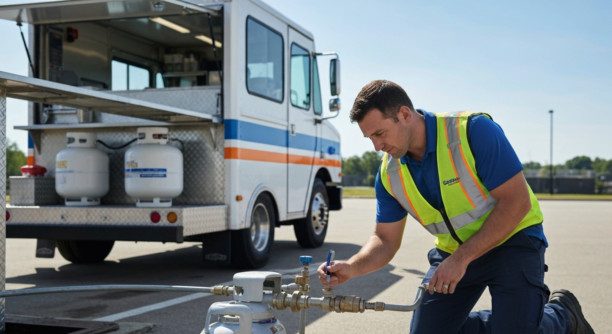
A series of recent food truck explosions linked to propane leaks is renewing industry concerns about safety standards for mobile LP gas systems. Investigators examining incidents in Illinois and North Carolina say leaking propane combined with ignition sources likely played a central role – highlighting the risks that come with propane use in constantly moving environments.
For propane suppliers, service technicians, and mobile food operators, the incidents are another reminder that regular inspections and proper maintenance are critical to preventing catastrophic accidents.
Recent Incidents Raise Serious Concerns
In Quincy, Illinois, officials investigating a food truck explosion determined that an LP gas leak combined with an electrical ignition source likely triggered the blast. Fire officials reported that propane had apparently accumulated inside a compartment before igniting.
A separate explosion in Leland, North Carolina, raised similar concerns. Early findings suggested a leaking propane cylinder inside a vehicle, paired with heat or an electrical spark, may have caused the incident.
While no widespread pattern has been identified, the similarities between the cases are drawing attention from safety professionals across the propane industry.
Why Mobile Propane Systems Carry Higher Risk
Food trucks and other mobile propane applications present unique challenges compared to stationary systems. That type of equipment is exposed to constant movement, vibration, road conditions, and changing weather/ elements. Over time, those factors can loosen fittings, stress fuel lines, and increase the wear on various propane components.
Unlike residential or commercial fixed systems, mobile setups often operate in tight spaces with generators, cooking equipment, electrical wiring, and high heat sources located close together. When propane escapes in these environments, even a small spark can create a dangerous ignition event.
Maintenance and Inspections Are Critical
Industry safety experts say many mobile propane incidents can be prevented through consistent inspections and stronger operator awareness. Leak checks, hose inspections, regulator testing, and proper cylinder securement are especially important in mobile applications where equipment shifts frequently during transport.
NFPA 58, the industry’s primary LP gas safety code, outlines standards for propane storage, handling, and system maintenance. But compliance alone is not always enough if inspections become inconsistent or operators overlook warning signs such as unusual odors, damaged connections, or aging equipment. For propane suppliers servicing food trucks and mobile kitchens, regular customer education is becoming increasingly important as these businesses continue to grow in popularity nationwide.
The Liability Risk for Propane Providers
Highly publicized explosions can create lasting reputational and financial consequences – not only for food truck operators, but also for the propane companies connected to their installation, supply, or maintenance work. Insurance carriers and investigators often examine service histories, inspection records, and training documentation after an incident occurs. Incomplete maintenance records or missed safety checks can quickly become part of legal and regulatory scrutiny. That reality is pushing many propane businesses to strengthen their documentation procedures and place greater emphasis on technician training for mobile LP gas systems.
A Growing Focus on Mobile Safety Standards
As food truck businesses expand across the country, propane safety in mobile environments is receiving greater attention from regulators, insurers, and fire officials. Industry groups continue encouraging operators to treat mobile propane systems with the same level of discipline applied to larger commercial installations. That includes scheduled inspections, proper ventilation practices, and immediate response to suspected leaks or damaged equipment. For propane companies, proactive safety engagement with these customers can help reduce risk while reinforcing trust and professionalism.
Food For Thought
Mobile propane systems require a different level of vigilance than stationary installations. In food trucks and other mobile operations, even minor equipment failures can escalate quickly when leaks occur near heat or electrical sources. As the industry faces increased scrutiny following recent explosions, propane companies that prioritize consistent maintenance, documentation, and safety education will be best positioned to reduce risk and maintain strong customer confidence.