Encampment Cylinder Incidents and Community Risk
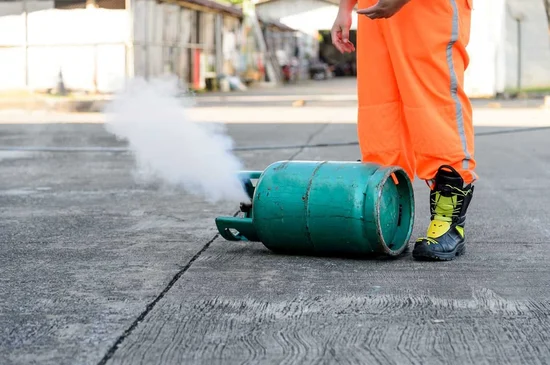
Cylinder encampments in parks, rights-of-way, and industrial fringes are no longer a peripheral concern for propane retailers. When cylinders appear in public spaces, the risk shifts quickly from a merely aesthetic or social issue to an operational and liability problem. These situations create ambiguous ownership, unclear custody of containers, and heightened exposure for marketers whose branding, fill practices, or service routes overlap the area. Beyond the obvious safety implications, the downstream effects influence insurance, dispatch decision-making, driver authority, and community relations. How a marketer responds in the first 24–72 hours following an encampment report often determines whether the issue resolves quietly or escalates into a reportable incident with regulatory and reputational consequences.
When a Public Encampment Becomes a Marketing Problem
From an operational standpoint, the moment a cylinder is reported in a public encampment, control becomes the central issue. Cylinders in these settings are frequently exchanged, refilled informally, or transported outside normal consumer use patterns. That undermines the assumptions built into standard customer risk models. A cylinder with an unknown fill history, valve condition, or storage environment cannot be treated like a normal residential container, even if it is the same size and make.
Marketers must also recognize that visibility changes responsibility. If a branded cylinder is photographed or identified near an encampment, the public narrative may assign ownership regardless of actual custody. That risk exists even when the cylinder was legally sold or exchanged months earlier. The operational response has to account for how quickly a safety issue can become a media or municipal inquiry.
Dispatch, Drivers, and the Limits of “Do Not Engage”
Many companies default to the practice of instructing drivers not to interact with encampments. While understandable, that approach can create concerning gaps. Drivers are often the first to observe unsafe storage, damaged cylinders, or illegal refilling activity. If they are not trained on what to document, who to notify, and how to disengage safely, valuable early warning is lost.
Clear dispatch protocols matter here. Drivers need authority boundaries that are specific, not vague – when to stop, when to report, and when to leave the area. Operations managers should assume that a driver’s decision will later be scrutinized by insurers or investigators. That means guidance must be clearly written, reinforced, and logged, not handled informally.
Insurance, Claims, and the Cost of Ambiguity
Encampment-related incidents often fall into gray areas for insurers. A fire involving a portable cylinder in a public space raises questions about ownership, maintenance responsibility, and foreseeability. Insurers will look closely at whether the marketer had prior notice, whether there were internal reports, and whether reasonable steps were taken to mitigate the risk once awareness of it existed.
This is where documentation becomes operationally valuable. Incident logs, driver reports, and communications with local authorities can materially affect claim outcomes. Companies that treat encampment issues as “not our problem” may find themselves defending that position after the fact, when documentation is thin and timelines are unclear.
Practical Response Steps for Marketers
1. Establish a Public Space Cylinder Protocol
Create written procedures specific to cylinders that are observed in encampments or other public settings. Define reporting thresholds, internal escalation paths, and documentation requirements separate from routine safety calls.
2. Train Drivers on Observation and Exit Criteria
Drivers should know exactly what to note – including cylinder condition, location, obvious hazards – and when to disengage immediately. Training should emphasize that reporting is not an intervention.
3. Coordinate Once with Local Authorities, Not Repeatedly
Designate a single management contact for municipal or fire department communication. Multiple, uncoordinated calls from drivers or office staff can create confusion or imply responsibility that has not been established.
4. Review Branding and Exchange Controls
If branded cylinders are repeatedly appearing in public encampments, reassess exchange agreements, distributor controls, and recovery practices. Repetition signals a systems issue, not a one-off event.
The Long View on Community Exposure
Encampment cylinder incidents are unlikely to disappear, and marketers should not expect regulators or municipalities to solve the issue for them. The companies that fare best are those that treat public-space exposure as an operational risk category, not a public-relations inconvenience. Clear internal rules, disciplined reporting, and restrained external engagement reduce both safety risk and legal uncertainty. Over time, this approach protects driver judgment, strengthens insurer confidence, and positions the marketer as a competent operator rather than a reactive one when public scrutiny inevitably arrives.