June 19, 2026
DOE Moves to Restrict Heat Pump Rebate Funding, Shifting Near-Term Outlook for Propane
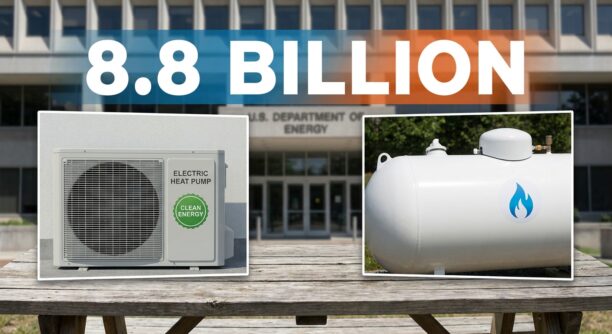
The U.S. Department of Energy’s decision to scale back nearly $8.8 billion in Inflation Reduction Act funding for electric heat pump rebates marks a notable policy shift in the ongoing balance between electrification initiatives and traditional fuel markets. Announced on June 11, 2026, the change effectively limits the reach of a program that had been positioned as a major driver of residential and commercial fuel switching in the United States.
For the propane industry, the move signals a stabilization point after several years of uncertainty tied to aggressive electrification incentives. Programs encouraging rapid adoption of electric heat pumps had been expected to accelerate the transition away from propane heating in certain markets, particularly in regions where state and federal incentives aligned to promote electrification as a primary policy goal.
Industry response has been swift. The National Propane Gas Association described the decision as a significant development for propane and other combustion-based fuels, pointing to the continued importance of energy diversity in regions where grid constraints, installation costs, and extreme weather conditions complicate full electrification strategies.
From a market perspective, analysts suggest the restriction on rebate funding may slow the pace of heat pump adoption in the near term. That could help maintain steadier demand for propane across residential heating, commercial applications, and bulk delivery services. For distributors and retailers, the expectation is that existing customer bases may remain more stable than previously forecast, particularly in rural and colder weather regions where propane continues to serve as a primary heating source.
The broader implications extend beyond residential heating alone. Propane marketers involved in system installations and long-term service agreements may see continued consistency in project pipelines, while manufacturers tied to electrification technologies could experience a more gradual demand curve rather than the rapid expansion previously anticipated under full rebate deployment.
At the same time, the policy shift reinforces a recurring theme in the energy sector: regulatory direction remains fluid, and market conditions can change quickly based on federal funding priorities. For propane businesses, that environment places added importance on monitoring policy developments and ensuring operational readiness across both compliance and safety frameworks.
While the long-term trajectory of electrification remains a central policy focus, the DOE’s latest decision introduces a near-term recalibration. For propane marketers, it represents a period of relative stability in a market that has seen frequent shifts driven by policy incentives, infrastructure constraints, and evolving consumer energy choices.