May 19, 2026
Top Technology Trends Shaping Fuel Delivery in 2026

Predictive operations, digital dispatch, and safety technology are transforming propane distribution
The fuel delivery industry continues to operate in an environment defined by volatility. Weather fluctuations, fuel price swings, labor shortages, and rising customer expectations are forcing companies to improve their operational efficiency like never before while continuing to maintain strict safety standards.
As a result, technology adoption across propane distribution is accelerating. Digital tools once used primarily for marketing or customer engagement are now being applied directly to operational challenges such as delivery forecasting, route optimization, and field safety documentation.
For propane distributors, the companies investing in operational technology are beginning to separate themselves and surge ahead from competitors who still rely heavily on manual systems and reactive planning.
From Reactive Dispatch to Predictive Delivery
Historically, many propane delivery operations have relied on reactive planning. Dispatch teams have typically responded to customer phone calls, low tank alerts, or short-term scheduling adjustments, often resulting in inefficient routes and emergency deliveries. New forecasting technologies are helping companies move toward predictive delivery planning instead. By analyzing historical consumption data, degree-day calculations, weather forecasts, and tank monitoring information, predictive models can estimate future fuel demand with greater accuracy.
This shift allows dispatch teams to schedule deliveries before tanks approach critical levels. Reducing emergency runs improves route density, lowers transportation costs, and stabilizes driver workloads during peak heating periods. Many companies are combining predictive forecasting with digital dispatch tools that provide real-time operational visibility across all fleets and delivery schedules.
Smarter Routing and Dispatch Visibility
Modern route optimization systems now consider a wide range of operational variables, including vehicle capacity, delivery windows, driver schedules, and real-time traffic conditions. Rather than simply calculating the shortest route, these systems optimize entire delivery networks to maximize gallons delivered per mile while reducing unnecessary travel time.
Improved routing also helps companies manage one of the industry’s most persistent cost drivers: transportation efficiency. For propane distributors operating across large rural service territories, reducing even a small percentage of their required mileage can produce meaningful savings over the course of a heating season.
Digital Customer Platforms Improve Communication
Customer expectations for service transparency have also increased. Many customers now expect the same level of delivery visibility and communication that they receive from other service providers. Customer-facing digital platforms are now helping propane companies meet these expectations. Mobile applications such as the Custom Fuel App allow propane retailers to provide branded customer portals where users can monitor deliveries, receive service notifications, review account details, and request deliveries directly from their smartphones.
Providing this level of visibility not only improves customer convenience but also reduces inbound service calls and the administrative workload for office staff. For propane companies competing in increasingly digital markets, these customer platforms can do much to strengthen long-term customer relationships while modernizing service communication.
Predictive Maintenance for Fleet and Infrastructure
Another emerging technology trend is predictive maintenance. Telematics systems and sensor data can now monitor vehicle performance, tank conditions, and operational equipment health. By identifying performance anomalies early on, companies can address maintenance issues before they result in vehicle breakdowns or equipment failures. Preventive maintenance scheduling helps maintain fleet availability while reducing costly service interruptions during high-demand periods.
In addition, asset management platforms such as the Tank Spotter app allow propane companies to digitally document tank inspections, capture site photos, and maintain centralized records for installed equipment. Having accurate asset documentation improves operational visibility while simplifying compliance reviews and insurance documentation.
Digital Safety Management
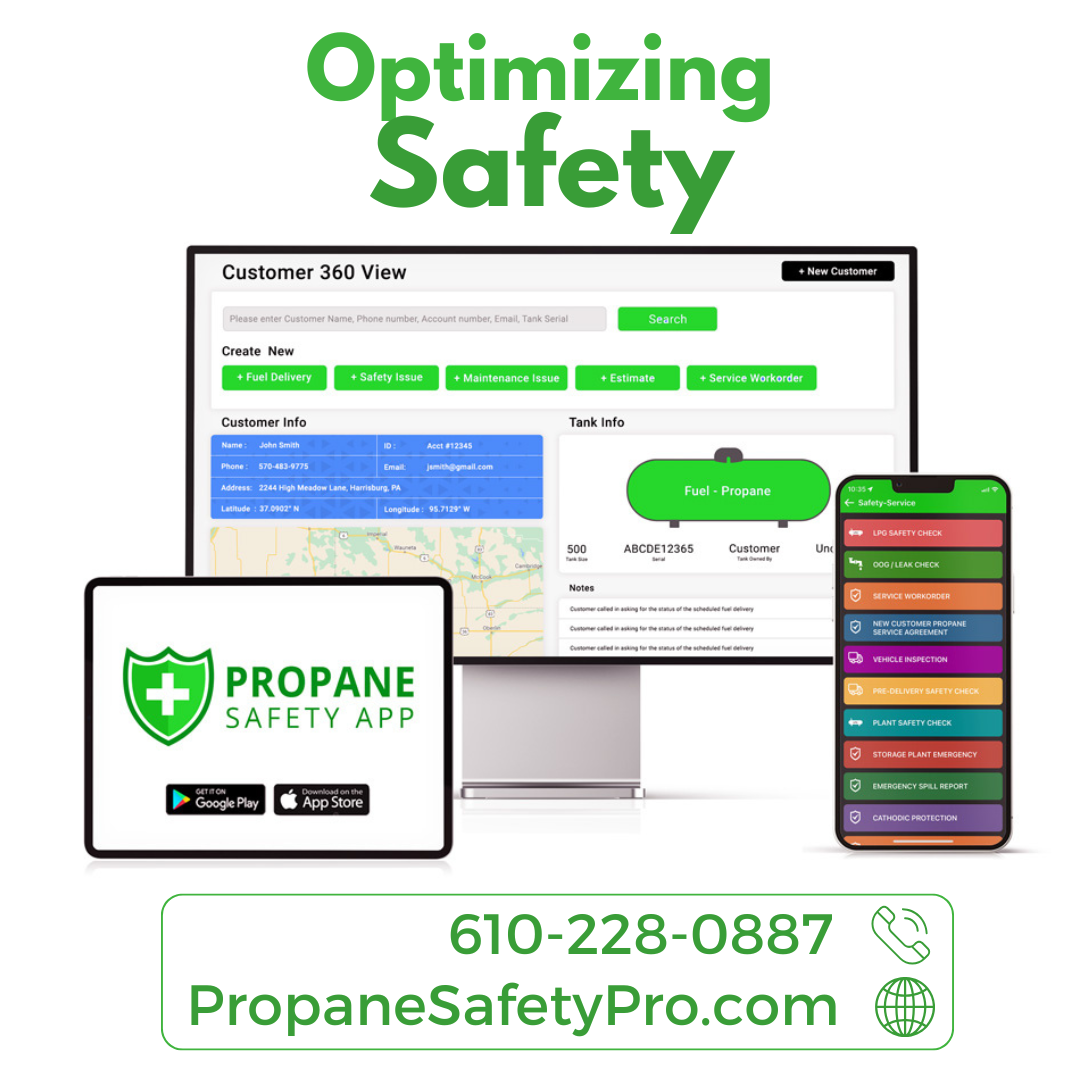
Safety remains a core responsibility for propane companies, and technology is increasingly supporting safety management efforts. Mobile field tools allow technicians to document inspections, service activities, and safety procedures directly from the job site. Platforms such as the Tank Spotter app provide digital records that include photo verification and geolocation, creating an auditable record of safety checks and service activity. For propane marketers managing large fleets and thousands of installed tanks, digital documentation systems help maintain consistent safety practices across multiple technicians and service territories.
Technology as a Competitive Advantage
Technology adoption in propane distribution is no longer limited to large national companies. Many mid-sized and regional propane marketers are now implementing practical tools that improve forecasting, dispatch planning, customer communication, and safety documentation. The goal is not complete automation. Instead, the objective is operational improvement, fewer emergency deliveries, more efficient routing, stronger customer communication, and better safety oversight.
Companies that combine predictive delivery planning with modern tools such as the Custom Fuel App for customer engagement and the Tank Spotter app for asset and safety documentation are increasingly building more resilient and efficient operations.
As the propane industry continues to evolve, companies that adopt practical operational technologies, while maintaining strong safety standards through compliance tools like Propane Safety Pro, will be better positioned to control costs, improve service reliability, and remain competitive in an increasingly demanding marketplace.