February 20, 2026
When a Competitor Slashes Winter Prices: Hold the Line
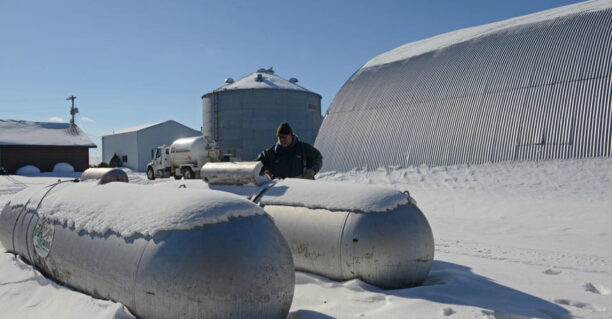
Winter price wars test discipline more than margins. When a nearby marketer undercuts you by 20–40 cents per gallon during the busiest season, the instinct is to respond in kind. But panic discounts during peak demand can destabilize routing, cash flow, and risk management at precisely the moment your operation is under the most strain. With wholesale prices volatile and demand swings still driven by winter weather, reactionary pricing can compound exposure. The operators who come out stronger are not necessarily the cheapest – they are the most reliable, predictable, and operationally sound.
Understand What the Competitor Is Really Selling
A below-market winter rate often reflects one of three conditions: excess contracted supply, a short-term cash grab, or weak service capacity masked by price. Before you adjust anything, analyze whether their pricing is sustainable relative to rack, transport, and storage costs in your region.
If they lack adequate storage or pipeline allocation and rely heavily on transport during peak demand, their model carries greater risk during supply interruptions. EIA regional propane stock reports routinely show how quickly inventories can tighten during extended cold snaps. When transport capacity constricts, the lowest bidder is usually the first to scramble. Your response should be rooted in your own cost structure and service model, not theirs.
Protect Margin to Protect Operations
Winter margin supports overtime, emergency callouts, truck maintenance, insurance, and compliance overhead. Underpricing erodes your ability to fund safe operations.
Delivery reliability depends on adequate staffing and disciplined dispatch. If you compress margins too far, you risk cutting overtime or deferring maintenance during the busiest weeks of the year. That is when DOT compliance exposure increases with drivers working extended hours, aging hoses in subzero conditions, and fatigued technicians responding to out-of-gas calls.
Insurance carriers evaluate claims history and operational controls, not how competitive your posted price was. Keep in mind the fact that a preventable winter incident costs more than losing a few price-sensitive accounts.
Retention Is Operational, Not Emotional
Customers rarely switch solely for price during winter; they switch when they believe the service risk is equal. Your objective should be to widen that perceived reliability gap.
Emphasize what price cutters often cannot guarantee: documented tank monitoring, degree-day forecasting, confirmed delivery windows, depth of emergency coverage, and trained service technicians on payroll. If you operate a tank monitoring program or structured will-call management protocol, quantify its performance internally. How many runouts did you prevent last season? How many emergency calls were avoided? Retention strategy is built around continuity of heat, not cents per gallon.
How to Respond Without Discounting
1. Segment and triage your book immediately.
Identify high-risk accounts: will-call customers, marginal credit profiles, and large-volume users near your competitor’s footprint. Assign a proactive contact from customer service. Do not blanket-email your entire base; that signals insecurity.
2. Reinforce automatic delivery enrollment.
Move fence-sitters onto auto-fill or tank monitoring where feasible. Reliability is your competitive moat. Offer operational assurances – not rate cuts – to justify stability.
3. Tighten dispatch visibility.
Increase internal reporting on delivery performance during the price-war period. Track on-time percentage, reruns, runouts, and overtime hours weekly. Reliability must be measurable if it is your strategy.
4. Control messaging, not price.
Equip CSRs with a concise script: acknowledge competitive offers, explain your service standards, and remind customers of peak-season risk. Avoid criticizing competitors. Focus on documented performance and emergency capacity.
Avoid the Long-Term Trap
Price wars can permanently reset customer expectations if you participate. Once you establish that your margin is flexible under pressure, regaining pricing discipline becomes difficult in the off-season.
Operators who maintained pricing integrity through prior volatile winters preserved fleet investment schedules and staffing depth. Those who discounted aggressively often faced deferred capital replacement and thinner safety margins the following year.
Winter exposes operational truth. If your value proposition is reliability, prove it with performance metrics and disciplined communication. Competing on price alone during peak season is not a strategy; it is surrendering your structural advantage at the worst possible time.
The Strategic Position Going Forward
A competitor’s winter underpricing is a stress test of your business model. If your retention depends on matching every posted rate, the issue is structural, not seasonal. But if your systems, forecasting, dispatch, storage, staffing, and compliance are strong, winter is when your discipline becomes visible.
Customers remember who answered the phone at 2 a.m. and who showed up when roads were iced over. They rarely remember the exact per-gallon difference from three winters ago. Protect the margin that protects your operation. Reliability, not panic discounting, is the long-term hedge.