Today in Propane: Supply Resilience, Safety Discipline, and Strategic Positioning in 2026
The propane industry entered 2026 with a renewed focus on operational resilience and disciplined risk management. Recent supply disruptions and continued regulatory pressure have reinforced a practical reality for propane marketers: reliability, documentation, and infrastructure discipline directly affect margins, insurance exposure, and customer retention.
Owners, operations managers, and dispatch teams are not reacting to headlines. They are evaluating supply access, compliance controls, and long-term positioning in an increasingly complex energy environment.
Midwest and Mid-Atlantic Disruptions Expose Distribution Vulnerabilities
November 2025 highlighted how quickly regional supply chains can tighten when critical infrastructure falters. A leak on Enterprise Products’ Mid-America Pipeline in Kansas temporarily halted operations during peak heating season. While repairs were completed within days, the disruption created immediate ripple effects across the Midwest, tightening terminal access and increasing rack volatility.
Shortly thereafter, a transformer failure at the Marcus Hook Terminal in Pennsylvania disrupted truck-loading operations for several days. Even short-duration outages at major hubs can create extended downstream effects, particularly when demand is elevated and lift schedules are compressed.
Thankfully, neither incident represented a national supply shortage. However, both demonstrated how regional infrastructure events can disrupt distribution timing and working inventory levels at the rack. For propane marketers, the operational takeaway is clear: national inventory figures do not guarantee regional access.
Strengthening Infrastructure and Supply Discipline
Infrastructure integrity remains foundational. While interstate pipelines and large terminals operate under federal regulatory oversight, including PHMSA jurisdiction for pipeline safety, marketers remain exposed to the downstream consequences of outages.
Companies should routinely stress-test emergency supply plans, confirm secondary terminal access, and maintain conservative storage buffers where capacity allows. Routing discipline and diversified supply relationships reduce exposure when lift windows tighten.
Technology continues to play a role in operational efficiency. Real-time tank monitoring and routing optimization systems reduce emergency dispatches and improve driver utilization. These tools support margin stability but do not replace disciplined scheduling and inventory management.
Safety Execution and Compliance Accountability
Operational pressure increases compliance risk. Transportation of propane cargo tanks remains governed by PHMSA’s Hazardous Materials Regulations in 49 CFR Parts 171 through 180. Driver qualification and hours-of-service standards fall under FMCSA authority. At facilities, OSHA standards apply to worker safety, and NFPA 58 governs LP-Gas system installation and operational safety.
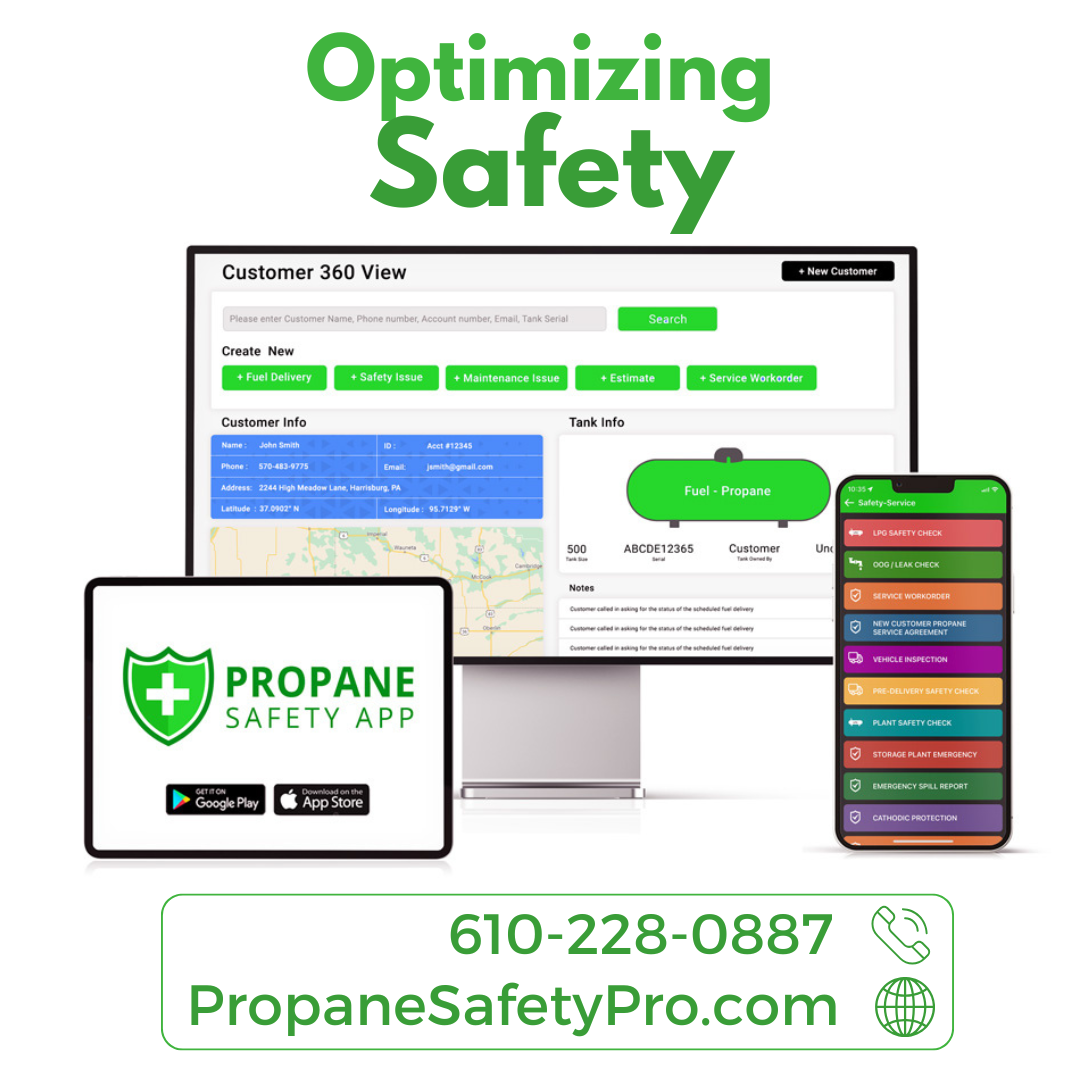
Execution—not policy language—determines exposure. Many marketers are strengthening field-level safety verification through structured inspection and documentation tools. Digital platforms such as the Propane Safety Pro app are being adopted to standardize bobtail inspections, cargo tank documentation, and field compliance tracking. Systems that produce time-stamped, verifiable inspection records can improve internal oversight and support defensible documentation in the event of regulatory review or litigation. Technology does not replace regulatory responsibility; it strengthens the ability to demonstrate it.
Insurance and Litigation Implications
Infrastructure failures and transportation incidents often influence insurance underwriting across the propane sector. Carriers increasingly review maintenance records, training documentation, and incident history during renewal cycles.
Business interruption exposure tied to supply disruptions can also affect loss modeling. Companies that demonstrate structured risk management and diversified supply access may be viewed more favorably than those operating without contingency planning.
Litigation exposure following serious incidents continues to trend upward across commercial transportation sectors. For propane marketers, documentation gaps frequently carry as much risk as the event itself.
Propane’s Strategic Position in a Changing Energy Landscape
At the same time, propane’s strategic value is strengthening in certain markets. Concerns over grid reliability, increasing power demand from industrial and data center growth, and customer interest in on-site energy solutions are reinforcing propane’s role in distributed energy resilience.
Renewable propane development continues to expand, offering an additional pathway for marketers serving customers focused on carbon intensity and sustainability metrics. While volumes remain limited relative to conventional supply, the category is gaining attention among commercial and institutional buyers.
Policy discussions around electrification mandates and energy choice remain active in several states. Propane marketers should monitor regulatory developments carefully, particularly where building codes or appliance restrictions affect market access.
The industry also continues to attract private capital, contributing to ongoing consolidation. Access to capital can strengthen infrastructure and technology investment, but it also increases competitive pressure in regional markets.
Executive Perspective
The propane industry in 2026 is defined by operational precision. Supply disruptions have reinforced the need for diversified logistics and disciplined inventory management. Regulatory scrutiny continues to demand complete documentation and structured safety oversight. Insurance markets are increasingly attentive to fleet and facility controls.
For propane business owners, resilience is not theoretical. It is built through contingency planning, compliance discipline, and conservative operational management. Growth opportunities remain plentiful. The companies that capitalize on them will be those that treat safety, supply access, and documentation as core business functions rather than administrative afterthoughts.