
June 12, 2026
Renewable Propane Tax Credit Push Could Open New Growth Opportunities
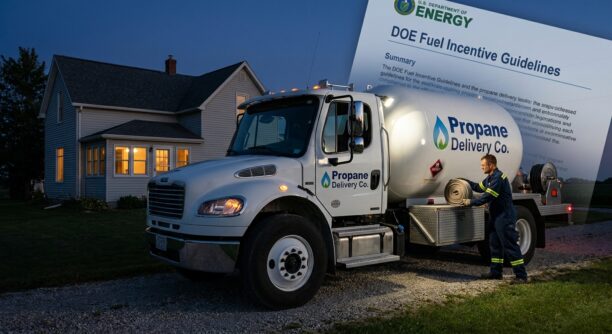
Industry Leaders Seek Greater Certainty for Renewable Fuel Investment
The propane industry is taking another step toward expanding its role in the low-carbon energy market. Recently, the National Propane Gas Association (NPGA) urged the IRS to finalize regulations supporting the Section 45Z Clean Fuel Production Credit, a federal incentive designed to encourage the production of lower emission transportation fuels. During IRS proceedings, NPGA officials emphasized the importance of creating a predictable framework that would encourage investment in renewable propane production and strengthen the industry’s long-term growth prospects. For propane marketers, the discussion goes far beyond tax policy. It could influence future fuel supply, customer demand, and business opportunities for years to come.
What Is Renewable Propane?
Renewable propane is chemically identical to conventional propane but is produced from renewable feedstocks such as vegetable oils, animal fats, agricultural byproducts, and other bio-based materials. Because it performs the same as traditional propane, renewable propane can be used in existing tanks, appliances, vehicles, and distribution systems without modifications. This compatibility has made it an attractive option for organizations seeking lower-carbon energy solutions without replacing existing infrastructure. While interest in renewable propane continues to grow, production volumes remain relatively limited compared to conventional propane supply. Industry leaders believe federal incentives could help accelerate investment and expand availability.
Why the 45Z Credit Matters
The Section 45Z Clean Fuel Production Credit was established to encourage domestic production of low-emission transportation fuels. Recent IRS proposals would allow qualifying renewable propane to receive tax credits based on its lifecycle emissions profile. Importantly for the propane industry, transportation-grade renewable propane could qualify even if it is ultimately used outside the transportation market, provided it meets the eligibility requirements outlined in the proposed regulations.
According to NPGA, a clear and predictable credit structure would provide the certainty producers need to invest in additional renewable propane capacity. The association has also advocated for favorable emissions calculations that accurately reflect renewable propane’s environmental benefits. For investors and producers, certainty often matters as much as the incentive itself. Large-scale production facilities require substantial capital, and businesses are generally reluctant to make long-term investments when future policy remains unclear.
Potential Benefits for Propane Marketers
Although the tax credit would apply to producers, the effects could ripple throughout the propane supply chain. Greater renewable propane production could increase availability and improve access for marketers interested in offering lower-carbon fuel options. As corporate sustainability goals continue to influence purchasing decisions, some commercial customers are actively seeking ways to reduce emissions without sacrificing reliability.
Renewable propane may help propane companies compete for opportunities in fleet fueling, commercial operations, backup power applications, and other sectors where environmental performance is becoming a larger factor in purchasing decisions. For fuel retailers, this creates the possibility of serving new customer segments while strengthening relationships with existing accounts focused on sustainability initiatives.
Positioning Propane for the Future
The broader energy conversation increasingly focuses on reducing emissions while maintaining reliability and affordability. Renewable propane offers the industry a way to participate in that conversation without abandoning the infrastructure that has supported propane customers for decades.
Unlike many emerging energy technologies, renewable propane works within existing distribution networks. Storage facilities, transportation equipment, customer tanks, and appliances can continue operating as they do today. That compatibility may become one of the industry’s greatest advantages as policymakers, businesses, and consumers search for practical pathways toward lower emission energy solutions.
What Businesses Should Watch Next
The proposed 45Z regulations are still moving through the federal rulemaking process, and final guidance will determine exactly how producers qualify and calculate credits. The outcome could significantly influence investment decisions across the renewable fuel sector.
For propane marketers, the immediate impact may be limited, but the long-term implications could be substantial. Increased production capacity, broader fuel availability, and growing customer interest in renewable energy options could all create new opportunities for growth.
As the industry awaits final decisions from regulators, one thing is becoming increasingly clear: renewable propane is moving from a niche discussion to a meaningful part of the propane industry’s future. Companies that understand these developments today will be better positioned to capitalize on emerging opportunities tomorrow.