
Released 2/25/2026
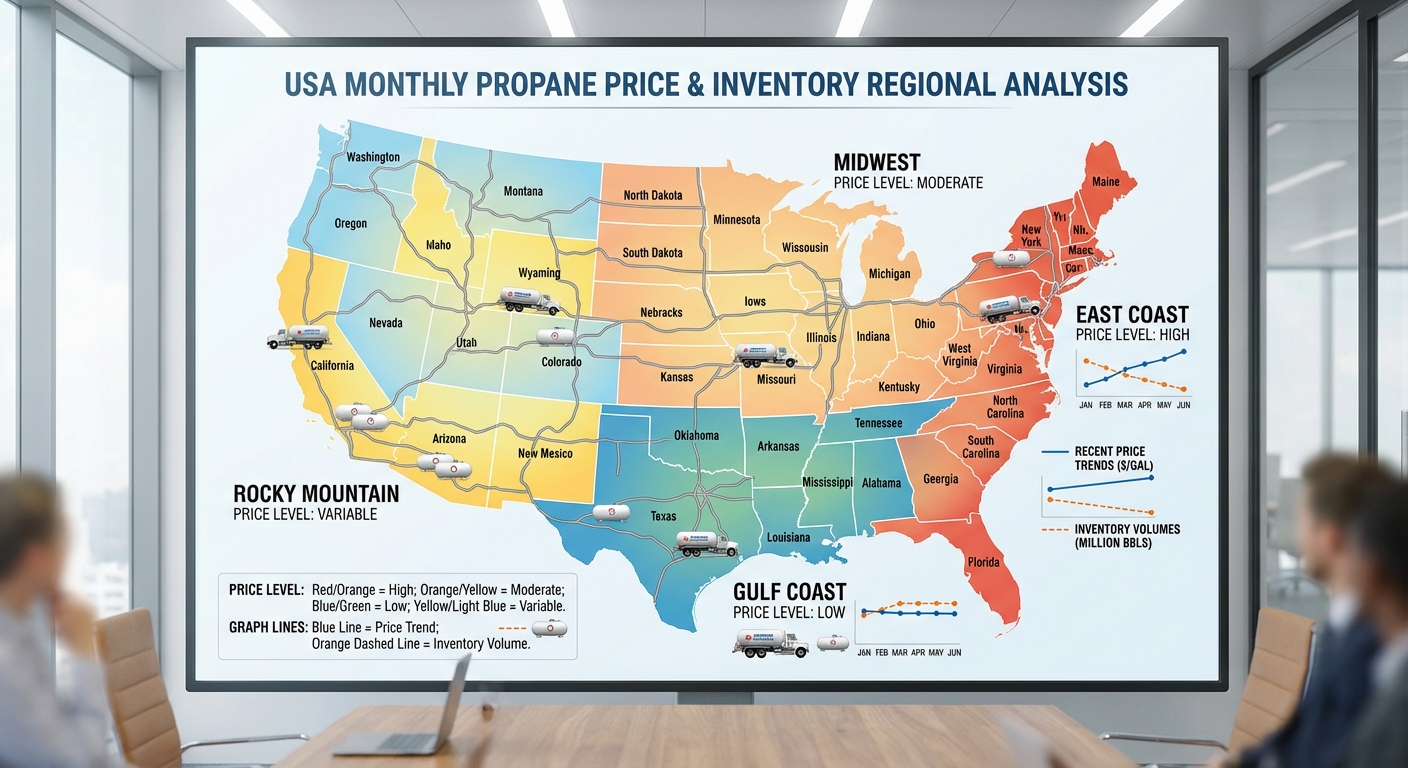
Regional price spreads widen amid tighter inventories and robust winter demand
The U.S. Energy Information Administration (EIA) released its latest Heating Oil and Propane Update on February 25, 2026, painting a mixed picture for the propane market. Wholesale residential propane prices climbed 4.2 % on the East Coast, holding steady at $2.95 per gallon, while the Midwest experienced a sharper 6.8 % jump to $3.12 per gallon. The Gulf Coast, traditionally the cheapest source, slipped to $2.78 per gallon as regional stocks tightened, and the Rocky Mountain region posted the steepest increase at 9.1 % to $3.35 per gallon.
Nationally, total propane inventories fell to 1.12 billion gallons, a 5 % decline from the same time last year, signaling a supply squeeze as winter heating demand peaks. Production remained flat at 2.45 billion gallons for the month, but the EIA notes that refineries are operating near capacity, limiting the ability to replenish depleted stockpiles quickly. The report also highlights a modest uptick in propane demand from the petrochemical sector, adding further pressure to an already constrained market.
For distributors and delivery fleets, the data underscores the importance of agile routing and pricing strategies. With regional price differentials widening, operators who can quickly adjust routes to capture higher margins stand to benefit. Leveraging real‑time dispatch tools and dynamic pricing dashboards helps companies match supply with the most lucrative demand zones while keeping delivery windows tight.
Beyond logistics, safety remains a critical focus as crews work longer hours in colder conditions. Companies can reinforce best practices and stay compliant by consulting resources such as PropaneSafetyPro.com, which offers up‑to‑date safety training, risk‑management guides, and compliance checklists tailored to the propane industry.
Looking ahead, the EIA projects that propane inventories will remain below the five‑year average through March, especially in the Rocky Mountain and Midwest regions. Stakeholders should monitor upcoming weather forecasts and potential refinery maintenance schedules, as both could further impact price volatility and supply availability in the critical early‑spring period.
In the meantime, distributors are advised to maintain close communication with wholesale suppliers, keep a buffer of critical stock, and use data‑driven routing platforms to stay ahead of market swings. By balancing aggressive margin capture with rigorous safety protocols, firms can navigate the current volatility while protecting both profit margins and crew well‑being.