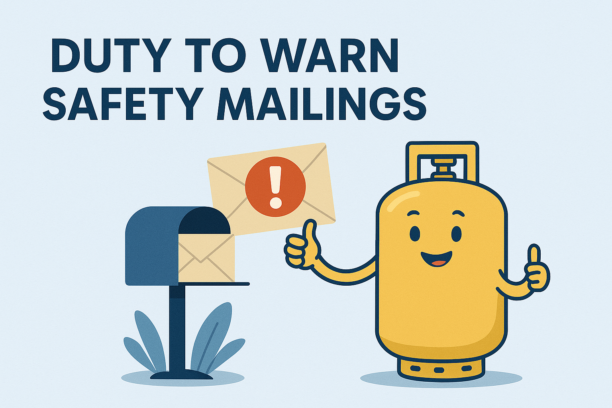
Duty to Warn Safety Mailings Strengthen Every Propane Business
Safety remains the foundation of responsible propane use, and yearly reminders are one of the most effective ways to keep households informed and protected. Duty to Warn programs are not new, yet they continue to play a critical role in reducing risk, supporting safe fuel use, and protecting the long-term stability of retailers who deliver propane to homes and businesses. Even as tools and communication channels evolve, clear annual safety information remains the most direct way to prevent accidents and reduce liability.
Duty to Warn mailings provide customers with the practical knowledge needed to use propane safely. These reminders help people recognize odors linked to gas leaks, understand what steps to take in an emergency, and know how to store and handle fuel correctly. For many families, the annual mailing is the only safety instruction they receive all year, which makes it a powerful tool for awareness and risk prevention. For propane delivery operations across the country, consistent safety mailings also support legal protection, insurance compliance, and a stronger relationship with the communities they serve.
The Purpose of Duty to Warn Programs
The core purpose of a Duty to Warn program is to communicate safety information clearly and consistently to every propane user on a retailer’s list. A yearly mailing ensures that all customers receive reminders about leak detection, proper fuel handling, odor fade, carbon monoxide risks, and emergency actions. This information aligns with established safety codes such as NFPA 58 and is recognized as a necessary practice in maintaining safe fuel use.
These mailings are not simply optional guidelines. Many insurers expect documented proof that safety materials were sent each year. A retailer that cannot show records of these reminders may face challenges during an audit or claim review. Annual mailings also demonstrate that the retailer has taken reasonable steps to warn customers of potential hazards, which is an important factor in legal protection.
What Annual Safety Reminders Teach
Well-crafted Duty to Warn materials teach customers several key safety practices. Leak awareness, especially through propane’s odorized scent, is one of the most important topics. Homeowners also learn that propane’s odor can fade under certain conditions and why proper inspection matters. Information regarding carbon monoxide safety, appliance maintenance reminders, safe storage guidance, and how to respond in an emergency are also included.
Clear, simple instructions do much to help prevent accidents before they occur. Many propane-related incidents stem from a lack of awareness or incorrect assumptions about how fuel systems work. When customers receive regular safety reminders, they are more prepared, more alert, more cautious, and more likely to act properly in the moments that matter most.
Legal and Insurance Value for Retailers
Duty to Warn mailings carry significant legal value. Courts often examine whether a propane retailer took reasonable steps to warn customers about known hazards. If an accident occurs and a retailer cannot present documentation that safety information was delivered, liability risks increase.
Insurance providers also view these programs as essential. Many carriers request proof of annual safety mailings during policy reviews or when evaluating claims. Missing records can lead to coverage issues or claim disputes. By keeping organized digital records of each mailing batch, a retailer can present clear evidence of their compliance and due diligence.
How Mailing Services Support Small Businesses
Small propane delivery companies often operate with limited staff, which makes large-scale mailings difficult to manage. Preparing letters, printing materials, verifying addresses, and documenting the process can take hours away from daily operations.
A structured Duty to Warn mailing service removes this burden by managing every step of the task. Customer lists are processed securely, safety packets are printed professionally, each mailing is sent with verified dates, and digital proof of completion is provided. This allows smaller retailers to easily meet safety requirements while staying focused on their core work.
Impact on Safety, Reputation, and Community Trust
Regular safety mailings do more than reduce liability; they serve to strengthen public trust. When customers receive clear safety information every year, they see that their propane provider is committed to responsible fuel use. This builds confidence and improves the reputation of the retailer within the community.
Accidents are rare, but when they do occur, having a consistent Duty to Warn record demonstrates professionalism and a strong safety culture. It demonstrates to customers, insurers, and regulators alike that safety is prioritized and not treated as just an afterthought. For propane delivery companies, a strong reputation is one of their most valuable assets, especially in tight-knit rural and suburban areas.
Strengthening Propane Safety for All
For propane retailers across the country, particularly small delivery operations, a complete Duty to Warn program is both practical and protective. Annual safety communication reduces risk, lowers liability, supports insurance compliance, builds stronger customer relationships, and protects long-term business stability.
By keeping customers well-informed on a regular basis, retailers can go a long way in helping to prevent emergencies, reducing service disruptions, and maintaining a safe environment for both households and delivery teams. A clear, consistent mailing program ensures that safety standards are upheld year after year, supporting a stronger, safer propane industry for everyone involved.