July 21, 2026
Requirements for Propane Generator System Installation
Why proper planning, sizing, code compliance, and customer education are critical to long-term system performance
Power outages are becoming more frequent across many parts of the United States. Severe storms, aging electrical infrastructure, wildfires, and hurricanes have pushed more homeowners and businesses to invest in standby power systems. As a result, propane-powered generators have become one of the fastest-growing propane applications in both residential and commercial markets.
For propane marketers, generator installations represent more than just an equipment sale. They create recurring gallon demand, strengthen customer relationships, and open opportunities for additional propane-powered appliances and services. However, successful generator installations require careful planning, proper fuel system design, and strict adherence to safety standards. A generator is only as reliable as the propane system supporting it.
The Growing Demand for Backup Power
Many homeowners no longer view generators as luxury items. After experiencing prolonged outages caused by extreme weather events or utility failures, customers increasingly see backup power as a necessity.
Businesses face even greater risks when power is lost. Restaurants, medical facilities, agricultural operations, stores, data centers, and manufacturing facilities can suffer significant financial losses during extended outages. For these customers, a properly installed propane generator can protect operations, inventory, equipment, and revenue.
This growing demand creates significant opportunities for propane retailers that understand both the fuel requirements and installation considerations associated with standby power systems.
System Sizing Begins With Load Analysis
One of the most common mistakes in generator projects occurs before installation even begins. Selecting the proper generator size requires a thorough analysis of the electrical loads the customer intends to power. Some homeowners may only want essential circuits such as heating systems, refrigeration, lighting, and well pumps. Others may expect whole-home coverage during an outage.
Commercial customers often have even more complex requirements involving HVAC systems, refrigeration equipment, computers, communications systems, and production equipment. Oversized generators can increase project costs unnecessarily, while undersized units may fail to meet customer expectations when power is lost. Proper load calculations help ensure the generator performs as intended when it is needed most.
Fuel Supply Must Match Generator Demand
Generator fuel demand is often underestimated. A standby generator may operate only a few hours each year during routine testing, but during a major outage it could run continuously for days. The propane storage system must be capable of supplying sufficient vapor pressure throughout the entire operating period.
This requires evaluating several factors, including:
• Generator fuel consumption rates
• Tank size
• Vaporization capacity
• Expected outdoor temperatures
• Anticipated runtime requirements
Cold weather can significantly affect vaporization rates, particularly on smaller tanks. A generator that performs well during summer testing may encounter fuel supply issues during a prolonged winter outage if the propane system was not properly designed. For this reason, installers often recommend larger storage tanks than customers initially expect. The additional capacity helps ensure reliable operation during extended emergencies.
Code Compliance Remains Essential
Every propane generator installation must comply with applicable national, state, and local requirements. NFPA 70 (National Electrical Code) establishes requirements for electrical connections, transfer switches, grounding, and related electrical components. NFPA 54 and NFPA 58 provide guidance on fuel gas systems, propane storage, piping, regulator installation, and safety practices.
Local jurisdictions may impose additional requirements regarding permits, inspections, setbacks, and equipment placement. Failure to comply with these requirements can create safety hazards, delay project completion, and expose contractors and propane providers to significant liability.
Generator Placement Matters
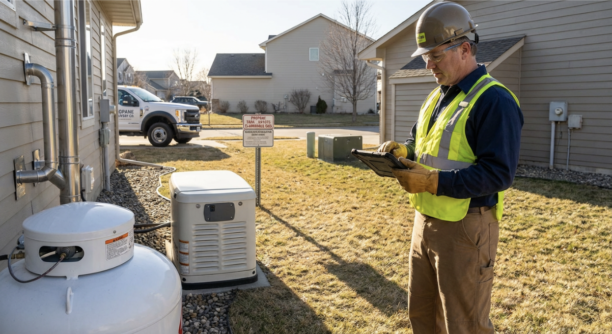
Proper placement is about more than convenience. Generators require adequate clearance from windows, doors, air intakes, ignition sources, and combustible materials. Exhaust gases must be directed away from occupied spaces to reduce the risk of carbon monoxide exposure.
Installers must also consider accessibility for maintenance and service. A generator squeezed into a tight corner may satisfy a homeowner’s aesthetic preferences but create ongoing service challenges for technicians. Noise considerations should also be discussed during the planning stage. While modern generators are quieter than older models, placement can still impact customer satisfaction and neighbor relations.
Leak Testing and System Verification
Before a generator is placed into service, the entire propane system should undergo comprehensive leak testing and inspection. This includes verifying piping integrity, checking regulator performance, confirming pressure settings, inspecting connections, and ensuring all components function properly under load. Testing should never be viewed as a final checkbox. It is a critical step that helps identify installation issues before they become safety incidents. Documentation of testing procedures and inspection results also provides valuable records for future maintenance and regulatory compliance.
Customer Education Is Often Overlooked
Many installation problems occur after the project is complete. Customers may not understand how often their generator should be exercised, how much propane it consumes, or when tank refills may be required during extended outages.
Taking time to educate customers can prevent unnecessary service calls and improve overall satisfaction. Homeowners should understand basic operating procedures, maintenance schedules, fuel consumption expectations, and emergency contact information. A customer who understands their system is far more likely to appreciate its value and maintain it properly.
A Long-Term Opportunity for Propane Marketers
Generator installations offer benefits that extend far beyond the initial sale. A residential standby generator can significantly increase annual propane consumption, while commercial systems may create substantial long-term gallon demand. In addition, generator customers often become strong candidates for other propane applications, including water heating, space heating, cooking, and outdoor living products.
As demand for backup power continues to grow, propane companies that develop expertise in generator system planning, fuel supply design, and installation support will be well-positioned to capture new business. The most successful projects are not simply about selling a generator. They are about designing a complete propane-powered backup energy solution that delivers reliable performance when customers need it most. When the lights go out, proper installation becomes the difference between confidence and disappointment – and propane marketers have an important role to play in ensuring the system performs exactly as promised.