
April 3, 2026
When Tank Size Errors Derail Delivery Operations
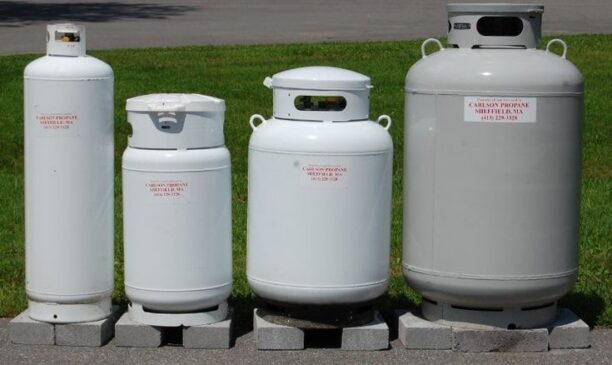
Accurate tank size data sits quietly inside every propane marketer’s software platform. However, it rarely gets attention until something goes wrong. A tank coded as 500 gallons that is actually 250. A buried 1,000 tank logged as an aboveground 500 one. A customer upgrade that never made it into the routing system. These errors do more than create awkward driver conversations. They distort degree-day forecasting, trigger runouts or overfills, increase reruns, inflate insurance exposure, and quietly erode margin. For operations managers balancing labor, supply contracts, and safety compliance, inaccurate tank data is not clerical noise. It is a structural operational risk.
Overfills: Safety Exposure and Insurance Risk
An overfill is not simply a driver error. It is often the downstream result of bad master data. When dispatch assumes a 500-gallon tank at 20 percent and routes 300 gallons, but the tank is actually a 250-gallon tank, the math no longer works. The driver may rely on the bobtail meter ticket and preset delivery volume instead of recalculating based on actual tank capacity. Even if the driver stops early, you have now introduced distraction, manual adjustments, and pressure to clear the stop.
Overfills create immediate regulatory and liability exposure. NFPA 58 sets maximum permitted filling densities and outlines operational requirements tied to safe fill limits. Exceeding 80 percent water capacity in typical residential tanks is not a paperwork issue; it is a reportable safety failure with potential civil exposure if an incident follows. Insurers review loss runs and operational controls closely. Repeated overfill claims can affect premium structure and underwriting terms. Most companies treat overfills as training events, whereas most are data events.
Underfills and Runouts: The Hidden Cost of “Almost Right”
Underfills are operationally quieter but often more expensive over time.
If a 500-gallon tank is mistakenly coded as 1,000, forecasting software will predict slower consumption rates and later delivery dates. The routing system may push the account deeper into the cycle, assuming greater on-site capacity. The result is an unexpected runout, especially during high-demand weather events.
The U.S. Energy Information Administration (EIA) consistently reports sharp weekly swings in residential propane demand during cold snaps. In those periods, forecasting tolerance shrinks dramatically. A 20–30 percent error in assumed tank capacity can collapse safety margins built into degree-day models.
Runouts drive emergency deliveries, after-hours labor, and customer churn. They also distort K-factor calculations because the system learns from incorrect capacity assumptions. Over time, bad tank data contaminates the entire forecasting dataset.
Reruns and Routing Inefficiency
Even when neither an overfill nor a runout occurs, incorrect tank size data drives reruns.
A dispatch team may schedule a stop expecting to drop 400 gallons, only for the driver to find a partially obstructed, smaller tank that physically cannot accept the projected volume. The delivered gallons fall short of route assumptions. The tank returns to the “will call” list prematurely. The account reappears in the routing queue days later. Multiply this across hundreds of accounts, and the impact becomes visible in route density metrics. Gallons per stop fall. Miles per delivered gallon rise. Bobtail productivity declines.
In a year when wholesale price volatility tightens per-gallon margin, those inefficiencies matter. EIA weekly propane inventory reports regularly show regional imbalances that translate into rack price swings. When margin compresses, route efficiency becomes the difference between a good month and a marginal one. Tank data accuracy is therefore not an administrative detail; it is a routing performance variable.
Compliance and Documentation Gaps
Incorrect tank size records also create documentation risk. When technicians perform leak checks, regulator changes, or cathodic protection inspections, documentation often references tank size and type. If internal records misidentify the asset, your compliance documentation becomes internally inconsistent.
In the event of an incident, plaintiff attorneys and insurers review service records carefully. A mismatch between documented tank capacity and actual installed equipment raises questions about inspection rigor and operational oversight. These exposures are preventable, but only if tank asset data is treated as controlled infrastructure, not static CRM information.
Action Plan: Tightening Tank Data Control
Operators who want to eliminate tank-size-related risk should focus on structural controls rather than one-time audits. Here’s how:
1. Conduct a targeted physical verification program
Do not audit the entire customer base at once. Prioritize high-consumption accounts, remote rural customers, and any account with repeated delivery variance flags. Require field confirmation of tank manufacturer plate data and water capacity during routine service visits.
2. Embed data validation into driver workflows
Modify handheld or mobile delivery software to prompt drivers to confirm tank size when delivery variance exceeds a defined threshold. Make confirmation mandatory before ticket closeout when preset volumes exceed 75 percent of recorded tank capacity.
3. Align forecasting assumptions with verified capacity
After verification, recalibrate K-factors and forecast settings for corrected accounts. Do not allow legacy consumption curves to remain tied to incorrect tank sizes. Reset forecasting baselines to prevent persistent model distortion.
4. Establish change-control discipline
When tanks are swapped, upgraded, or removed, require real-time system updates before the job can be closed in dispatch software. Tie asset updates to inventory control and serial number tracking to prevent silent mismatches.
These steps require coordination between operations, IT, service, and dispatch. They are vital risk-control projects, and should be treated as such.
The Strategic Implication for Propane Marketers
Propane companies often focus capital and management attention on supply contracts, storage capacity, and fleet maintenance. Those are visible operational levers. Tank data accuracy is less visible, but equally structural.
Inaccurate tank size records quietly undermine safety margins, forecasting reliability, route density, and compliance defensibility. They amplify volatility during peak demand periods and erode operational efficiency during stable ones.
Treating tank data as a controlled operational asset rather than a back-office detail reduces incident exposure, lowers reruns, stabilizes forecasting, and protects margin. In an industry where weather and wholesale markets are uncontrollable variables, internal data accuracy remains one of the few risks fully within management control.