January 30, 2026
Why Safety Data May Be the Most Underrated Asset in Your Propane Business

Safety has always been fundamental to the propane industry, but a new push to centralize safety data could transform how companies manage risk and performance. Industry leaders, including the Propane Education & Research Council (PERC) and the National Propane Gas Association (NPGA), are advancing efforts to create a national propane safety data repository – an initiative designed to move safety management from reactive to predictive.
Today, most propane companies rely on internal incident logs, insurance reports, or generalized OSHA data to evaluate safety performance. These sources provide limited context and make it difficult to identify industry-wide trends. The proposed repository would aggregate anonymized data on accidents, near misses, vehicle incidents, and workplace injuries, giving marketers a clearer picture of where risks truly lie.
For propane delivery companies, this shift provides a solid competitive advantage. Access to broader benchmarking allows managers to see how their operations compare to peers and identify patterns that might otherwise go unnoticed. Are most incidents occurring during bobtail loading? On residential driveways? During specific weather conditions? Data-backed answers enable targeted training and smarter operational decisions.
There’s also a financial upside. Insurance carriers increasingly reward companies that demonstrate proactive, data-driven safety programs. Strong documentation and trend analysis can support better premiums, faster claims resolution, and improved regulatory relationships. Just as importantly, a transparent safety culture improves employee trust and retention – two critical factors in today’s tight labor market.
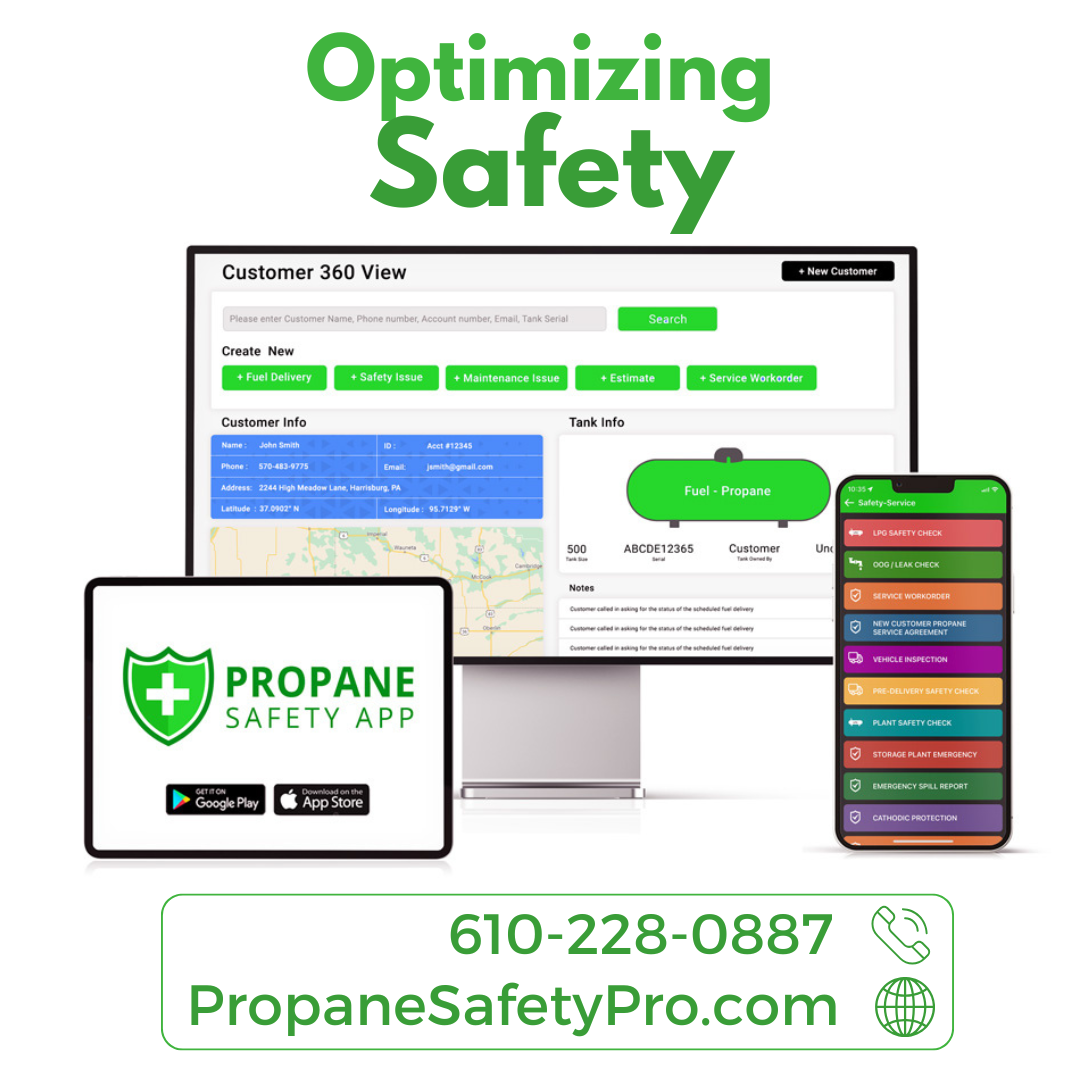
Digital tools are already helping propane marketers move in this direction. Platforms like Tank Spotter support more consistent safety reporting by capturing tank data, inspections, and field observations in real time. By centralizing operational and asset-level information, these systems make it easier to document safety conditions, identify risks early, and maintain accurate records that can support compliance, audits, and insurance discussions.
Companies that invest early in structured safety reporting and digital compliance tools will be best positioned to benefit as the industry moves toward shared data insights. By treating safety information as a strategic resource rather than a paperwork requirement, propane marketers can reduce incidents, protect their workforce, outpace their competition, and reinforce propane’s reputation as a responsibly managed energy solution.