Enhancing Customer Experience Through Predictive Delivery Analytics

Data-driven forecasting helps propane marketers improve delivery reliability and operational efficiency. Customer expectations in the propane industry continue to evolve. Residential and commercial customers increasingly expect reliable deliveries, clear communication, and convenient digital access to their accounts. For propane marketers, predictive delivery analytics is becoming an important tool for meeting these expectations while improving operational efficiency.
Rather than relying solely on fixed delivery schedules or customer call-ins, many companies are now using data analytics to anticipate when customers will require service. By analyzing historical delivery records, weather patterns, and consumption trends, predictive systems help dispatch teams plan deliveries before tanks reach critical levels. For propane distributors managing hundreds or thousands of tanks across large service territories, this approach can significantly improve delivery reliability while reducing costly emergency runs.
Moving From Reactive to Predictive Delivery
Traditional delivery models often depend on customer calls, manual tank checks, or calendar-based routing. While these methods remain common, they can create inefficiencies when demand changes quickly due to weather shifts or unexpected consumption patterns.
Predictive analytics addresses this challenge by combining multiple data sources to estimate future fuel demand. Historical usage patterns, degree-day calculations, weather forecasts, and tank monitoring data can all contribute to more accurate delivery planning.
When integrated into dispatch operations, these insights allow companies to proactively schedule deliveries rather than reacting to runout calls. This approach reduces emergency deliveries, improves route density, and stabilizes driver workloads during peak heating periods.
Improving Dispatch and Route Efficiency
Predictive delivery planning also supports more efficient routing. When delivery schedules are built around forecasted demand rather than last-minute service calls, dispatch teams can group deliveries more effectively and minimize unnecessary mileage.
More consistent routing helps reduce fuel consumption, driver overtime, and vehicle wear. It also allows companies to maintain tighter delivery windows and improve the reliability of schedules during periods of high demand. For propane companies operating across large rural territories, even modest improvements in routing efficiency can have a meaningful impact on transportation costs.
Strengthening Customer Communication
Predictive delivery systems also improve communication with customers. When delivery timing becomes more predictable, companies can provide clearer service windows and proactive notifications.
Digital customer platforms are increasingly used to support this communication. Mobile applications such as the Custom Fuel App allow propane companies to provide customers with a branded interface where they can view delivery updates, receive service notifications, review account information, and request deliveries directly from their mobile devices. Providing this level of visibility reduces inbound service calls while greatly improving the overall customer experience.
Data Integration Is the Foundation
Effective predictive delivery planning depends on reliable data. Consumption history, delivery records, tank size, weather conditions, and service history all contribute to accurate forecasting models.
Many propane companies also incorporate tank monitoring systems and fleet telematics to further improve forecasting accuracy. When integrated with dispatch software and customer account systems, this information provides a comprehensive operational view.
Despite advances in analytics and automation, experienced dispatchers remain essential. Human judgment continues to play an important role in adjusting routes, responding to weather events, and managing operational constraints.
Maintaining Safety and Compliance
As propane companies adopt more advanced delivery planning technologies, maintaining strong safety oversight remains critical. Field inspections, tank documentation, and compliance procedures must remain consistent across all operations.
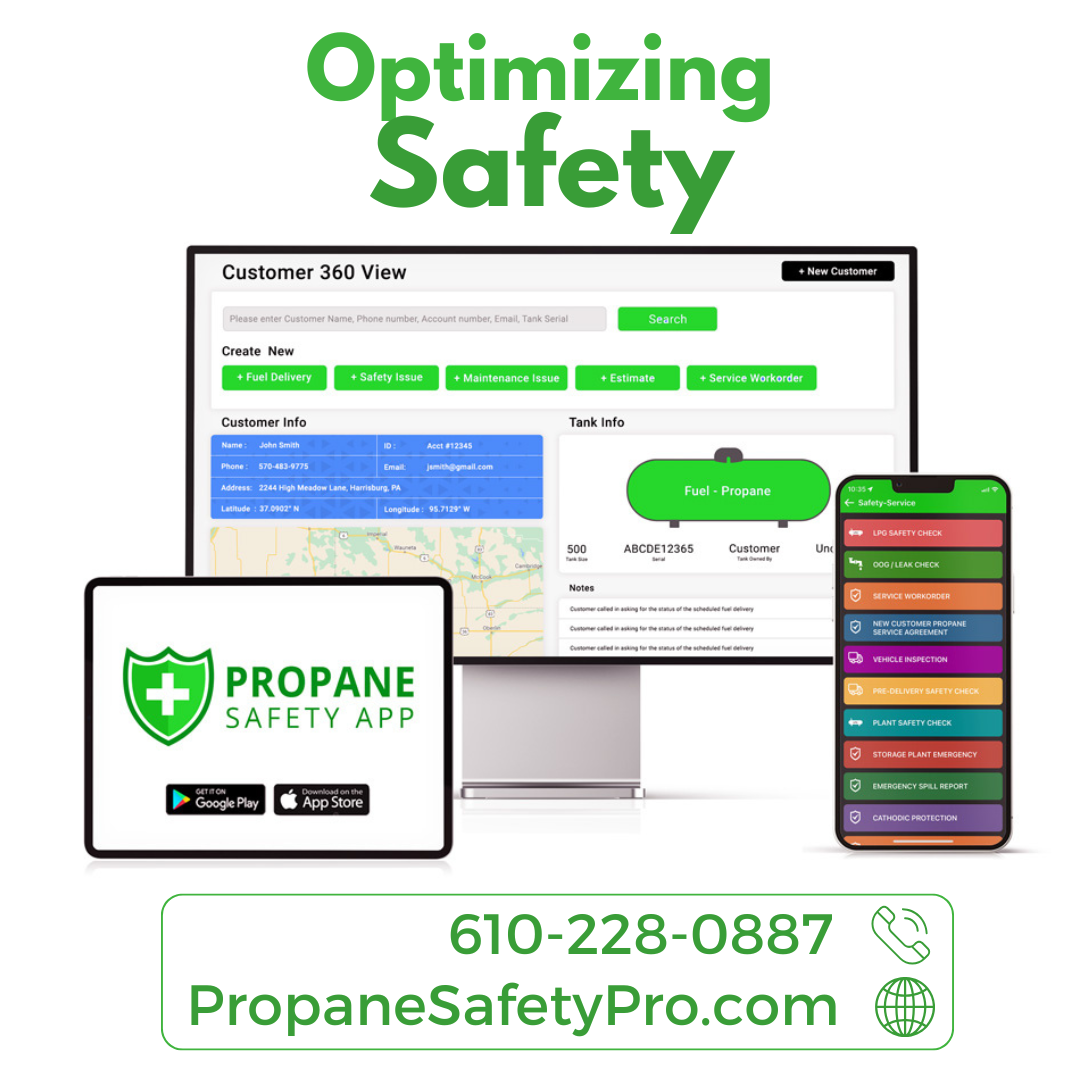
Digital safety platforms can support these efforts by replacing paper-based documentation with mobile inspection tools. Solutions such as Propane Safety Pro allow technicians to document tank inspections, safety checks, and operational procedures directly from the field while creating verifiable digital records.
For propane marketers managing large numbers of tanks and service calls, centralized safety documentation helps improve oversight, simplify audits, and maintain consistent compliance across service territories.
A Competitive Advantage for Modern Propane Operations
Predictive delivery analytics does not replace traditional propane delivery operations. Instead, it enhances them by providing better information for planning routes, scheduling deliveries, and communicating with customers.
For propane business owners and operations managers, the advantages are clear. More accurate forecasting reduces runouts, improves routing efficiency, strengthens customer relationships, and supports better safety oversight. As operational tools such as predictive analytics platforms, customer apps like the Custom Fuel App, and safety systems such as Propane Safety Pro become more common across the fuel sector, companies that integrate these technologies into their operations will be better positioned to manage demand, control delivery costs, and maintain high service standards in an increasingly competitive industry.