
April 28, 2026
Local Markets Drive Propane Performance More Than National Trends
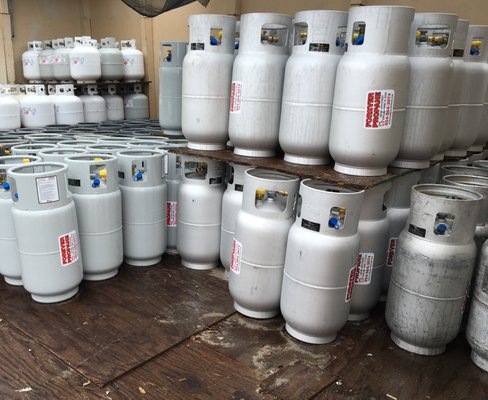
National propane data provides useful context, but it rarely reflects the conditions that actually determine performance at the local level. Degree days, housing density, infrastructure access, and state-level regulations vary widely across different regions, and those differences directly affect margins, delivery efficiency, and risk exposure. Operators who rely too heavily on national averages often misjudge demand timing, pricing pressure, and operational costs. In practice, profitability is shaped far more by local weather patterns, customer mix, and logistical constraints than by broad market indicators. Understanding and managing those regional variables is essential for maintaining control over both operations and financial outcomes.
Weather Variability Changes Everything at the Route Level
National heating demand forecasts can miss the mark when applied locally. A colder-than-average winter in one region can drive significant demand spikes, while another area experiences mild conditions and reduced consumption. These localized swings affect not only total gallons sold but also delivery frequency, staffing needs, and asset utilization.
Operators who depend on national outlooks often find themselves either overcommitted or underprepared. Excess staffing and idle trucks during a warm season reduce efficiency, while underestimating a regional cold snap leads to runouts, emergency deliveries, and increased safety exposure.
Localized degree-day tracking and historical consumption data provide a more accurate basis for planning. Delivery schedules, driver hours, and inventory positioning should be adjusted based on regional weather trends rather than national averages that may not apply.
Supply and Infrastructure Constraints Are Region-Specific
Access to supply is not uniform across the country. Some markets benefit from proximity to major storage hubs, pipeline systems, or rail terminals, while others rely on longer-haul trucking or seasonal storage. These structural differences directly affect cost, delivery timing, and vulnerability to disruption.
During periods of tight supply or logistical strain, regional disparities become more pronounced. Transportation bottlenecks, terminal outages, or weather-related disruptions can impact one market while leaving others largely unaffected.
For operators, this means supply planning must be tailored to local conditions. Contract structures, storage capacity, and supplier diversification should reflect regional realities. Businesses operating in constrained markets often require more conservative inventory strategies and stronger supplier relationships in ordere to maintain reliability.
State and Local Regulations Shape Operational Risk
Compliance requirements vary significantly by state and even by municipality. Tank setback rules, inspection standards, licensing requirements, and delivery restrictions can differ enough to materially affect how a business operates. These differences influence everything from driver training to equipment investment. A compliance issue in one jurisdiction may not exist in another, but failure to meet local requirements can result in fines, liability exposure, or operational shutdowns.
Insurance considerations also vary based on regional risk profiles. Areas prone to extreme weather, wildfire exposure, or dense residential development often carry different underwriting standards. Operators who treat compliance and risk management as uniform across their footprint often overlook critical gaps.
Customer Mix and Usage Patterns Vary by Region
Residential heating demand may be the backbone of propane sales, but customer mix differs widely across local markets. Agricultural drying, commercial accounts, and autogas usage can represent a larger share in certain regions, creating different demand cycles and operational pressures.
These variations affect delivery timing, pricing strategies, and service expectations. Agricultural demand, for example, can create sharp seasonal spikes that require rapid scaling of operations, while residential-heavy markets demand consistent service throughout the heating season.
Understanding the dominant customer segments in a given area allows operators to align their staffing, equipment, and scheduling more effectively. It also supports more accurate forecasting and pricing decisions tailored to local demand behavior.
Recommendations for Retailers
Propane businesses that align operations with local conditions consistently outperform those that rely on national benchmarks. To achieve that goal, owners should focus on the following:
• Build localized demand models
Use historical delivery data and regional weather patterns to forecast demand at the route and customer level.
• Strengthen regional supply strategies
Diversify supply points where possible and align storage capacity with local risk exposure and transportation constraints.
• Audit compliance by jurisdiction
Regularly review state and local regulations to ensure operations, training, and equipment meet all requirements in each service area.
• Segment customers by usage patterns
Adjust delivery schedules, staffing, and pricing strategies based on the dominant customer types in each region.
Execution at the Local Level Determines Results
Propane businesses do not operate in a uniform market, even when national data suggests broad stability. Performance is shaped by local weather, infrastructure, regulation, and customer behavior, all of which vary more than most high-level reports capture. Companies that build their strategies around these regional realities maintain better control over costs, reduce operational risk, and respond more effectively to changing conditions. Those who rely on national trends alone often miss critical signals. Long-term success depends on treating each local market as its own operating environment and managing it with precision.