
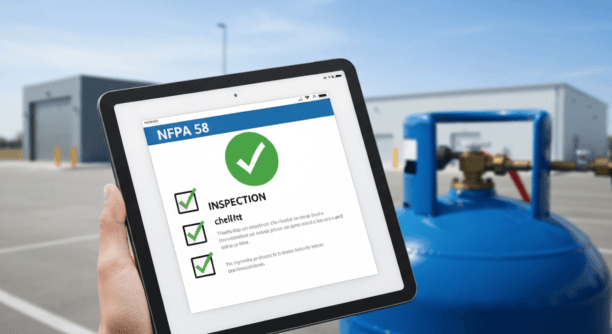
New Compliance Expectations Are Raising the Bar for Propane Operators
The propane industry is entering a new era of compliance as the National Fire Protection Association (NFPA) rolls out updates to its 2026 safety codes. While many revisions focus on documentation, inspection procedures, and reporting standards, the broader message is clear: paper-based systems are becoming harder to defend in today’s regulatory environment.
For propane retailers, delivery fleets, and bulk plant operators, the latest code cycle signals a growing shift toward digital tracking, real-time documentation, and technology-driven safety management. Companies that modernize early may gain a major operational advantage. Those that delay could face rising compliance costs, slower audits, and increased liability exposure.
Why the 2026 NFPA Updates Matter
NFPA standards are updated every few years to reflect new technologies, operational risks, and lessons learned from real-world incidents across the fuel and fire protection industries. The 2026 revisions continue that trend. While many propane companies already follow strict safety procedures, regulators and insurers increasingly expect proof — not just policy manuals sitting in an office binder.
That means businesses must be prepared to quickly verify:
• Tank inspections
• Leak checks
• Employee training records
• Maintenance schedules
• Pressure testing
• Emergency response procedures
• Vehicle safety compliance
In practical terms, documentation of work is becoming just as important as the work itself.
The Industry Is Moving Beyond Paper
For decades, many propane companies relied on handwritten inspection forms, clipboards, and filing cabinets. But as operations grow more complex, those systems create problems.
Paper records can be:
• Lost or incomplete
• Difficult to retrieve during audits
• Vulnerable to human error
• Hard to standardize across multiple crews
Digital systems are changing that. Today, many propane operators are using tablets, mobile inspection apps, GPS verification, and cloud-based reporting systems to document field activity in real time. Instead of waiting days for paperwork to return to the office, managers can instantly review inspections, maintenance logs, and compliance reports from anywhere.
What Regulators and Insurers Are Looking For
Insurance carriers and fire marshals are paying closer attention to documentation quality, especially after several high-profile fuel incidents nationwide. A propane company may technically complete inspections correctly — but if records are missing, inconsistent, or difficult to verify, that can create major problems during investigations or claims reviews.
Strong digital documentation helps companies demonstrate:
• Consistency: Every technician follows the same inspection procedures every time.
• Accountability: Managers can verify who completed the work, when it happened, and where.
• Faster Incident Response: Digital records allow companies to quickly access tank histories, maintenance logs, and customer records during emergencies.
• Audit Readiness: Electronic reporting dramatically reduces the time needed to prepare for state inspections or insurance reviews.
Small and Mid-Sized Propane Companies Face Pressure Too
Large national operators are not the only businesses adapting to stricter compliance expectations. Independent propane retailers and regional delivery fleets are increasingly expected to maintain the same level of documentation and safety oversight as larger competitors. For smaller operators, that creates both pressure and opportunity.
Companies that modernize early can often improve:
• Dispatch coordination
• Route efficiency
• Inspection accuracy
• Customer communication
• Employee accountability
In many cases, operational improvements help offset the cost of upgrading systems.
Key Areas Propane Companies Should Review
As the 2026 code cycle approaches, industry experts recommend that propane businesses evaluate several critical areas including:
• Inspection Workflows: Review how inspections are documented and whether records can be easily retrieved during audits.
• Employee Training Records: Ensure that all certifications, refresher courses, and safety meetings are consistently tracked.
• Tank Maintenance Programs: Confirm that maintenance schedules are standardized and properly documented across every location.
• Emergency Response Planning: Update response procedures and verify that crews understand current protocols.
• Fleet Compliance: Review DOT documentation, bobtail inspection schedules, and driver safety reporting systems.
Technology Is Becoming a Competitive Advantage
Safety compliance is no longer just about avoiding fines. Increasingly, it affects customer trust, insurance relationships, and business growth. Commercial customers, municipalities, and large agricultural accounts often prefer suppliers with stronger compliance systems and documented safety programs.
Companies that can quickly produce clean records and demonstrate proactive safety management are better positioned to:
• Win larger accounts
• Reduce liability exposure
• Improve insurance negotiations
• Strengthen public trust
• Protect long-term profitability
Looking Ahead
The NFPA’s 2026 updates reinforce a growing reality in the propane industry: safety management is becoming more data-driven, more transparent, and more technology-focused. For propane companies, the transition away from manual systems is accelerating. Businesses that invest now in digital documentation, inspection tracking, and compliance workflows will likely face fewer operational headaches as standards continue evolving. In an industry built on reliability and trust, strong safety systems are no longer optional; they are becoming a core part of doing business.