
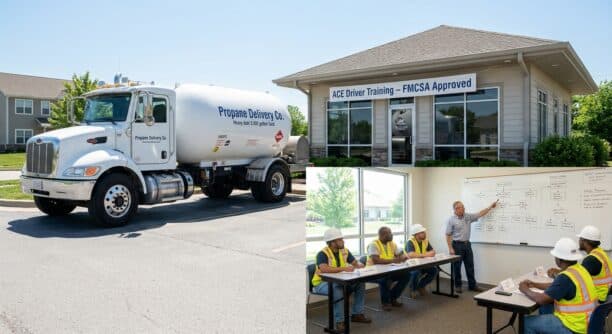
FMCSA audit confirms NPGA curriculum meets federal training standards for hazardous materials drivers. Safety training has always been one of the propane industry’s most important investments. Now, that commitment has received a significant endorsement from federal regulators. The National Propane Gas Association’s ACE (Advanced Commercial Education) driver training program has successfully passed an audit conducted by the Federal Motor Carrier Safety Administration (FMCSA), confirming that the curriculum meets federal entry-level driver training requirements for hazardous materials transportation.
For propane marketers and fleet operators, the announcement represents more than a regulatory milestone. It provides additional confidence that one of the industry’s most widely recognized training programs aligns with the standards that federal inspectors expect to see during audits, roadside inspections, and compliance reviews.
A Significant Milestone for Propane Transportation
The FMCSA review examined multiple aspects of the ACE program, including curriculum design, instructor qualifications, training delivery methods, and record management practices. Successfully completing the audit demonstrates that the program satisfies federal expectations for preparing drivers who transport hazardous materials.
As propane companies continue to face increased regulatory oversight, driver shortages, and growing customer expectations around safety, having access to a federally validated training framework offers a valuable advantage. This achievement also reinforces the propane industry’s long-standing focus on safety as a business priority rather than simply a compliance requirement.
Why Training Matters More Than Ever
The responsibilities of a propane delivery driver extend far beyond operating a commercial vehicle. Drivers are expected to understand cargo securement requirements, emergency response procedures, hours-of-service regulations, customer-site hazards, and safe product handling practices. They often serve as the only company representative customers see on a regular basis, making them a critical part of both operational performance and risk management.
A single mistake involving hazardous materials transportation can trigger costly regulatory penalties, vehicle damage, environmental concerns, injuries, or reputational harm. Comprehensive training helps reduce those risks while creating more confident and capable employees. For many propane companies, training has become one of the most effective tools for improving both safety outcomes and operational consistency.
Compliance Benefits for Fleets of All Sizes
One of the most practical advantages of the ACE program’s federal validation is the clarity it provides during compliance reviews. Fleet operators are increasingly expected to demonstrate not only that training occurred, but also that it was documented properly. Programs that maintain organized records and provide standardized instruction can help simplify inspections and reduce administrative burdens.
Many companies have discovered that digital training records offer significant advantages over traditional paper-based systems. Electronic documentation allows supervisors to track course completion, verify certifications, and quickly produce records when requested by regulators or auditors. As compliance requirements continue to evolve, strong recordkeeping is becoming nearly as important as the training itself.
Early Results Suggest Operational Benefits
Several propane companies that have incorporated structured driver training programs report measurable improvements beyond just compliance. Fleet managers have noted reductions in safety-related violations, improved driver confidence, and smoother audit experiences. Better-trained drivers also tend to make fewer procedural errors, which can translate into lower operating costs and reduced exposure to liability. While every operation is different, many companies view training investments as a long-term strategy for protecting both employees and the business itself.
What This Means for Propane Businesses
The FMCSA audit outcome sends a clear message: standardized, well-documented training programs are becoming an increasingly important part of successful propane operations. For smaller propane retailers, the ACE program offers a proven framework that can help strengthen onboarding, improve safety culture, and support regulatory compliance. For larger fleets, it provides another tool for maintaining consistency across multiple drivers, service territories, and operating locations. The announcement also serves as a reminder that safety is not a one-time achievement. Regulations evolve, operational risks change, and employee development must continue alongside them.
Looking Ahead
As propane companies prepare for future workforce challenges and heightened regulatory expectations, training will remain a key differentiator. The successful FMCSA audit of the ACE Driver Training Program demonstrates that industry-developed solutions can meet federal standards while addressing the unique realities of propane transportation. For fleet operators focused on safety, compliance, and long-term growth, that validation offers a valuable benchmark for the road ahead.