June 5, 2026
Sturgis, South Dakota: Propane Tanks Explode During Pole Barn Fire
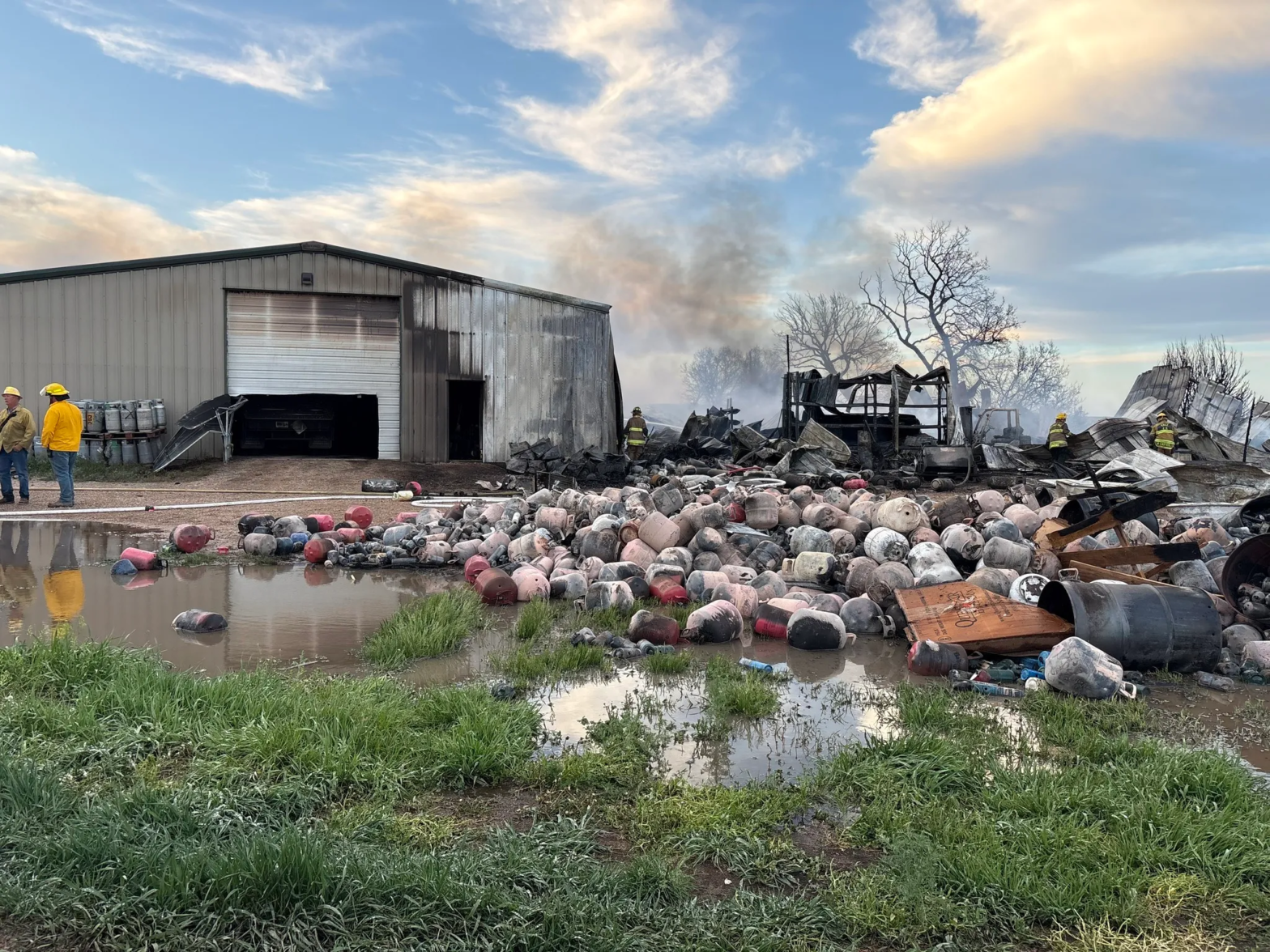
On the afternoon of May 13, 2026, the Sturgis Volunteer Fire Department responded to a pole barn fire in the Black Hills region of western South Dakota. Crews arriving on scene found the structure actively burning. During firefighting operations, propane tanks stored at or near the structure reached ignition conditions and exploded, producing visible flame jets, hurling debris across the scene, and igniting grass fires in the surrounding area.
No injuries or damage estimates were released at the time of reporting. The cause of the original fire was not determined in initial accounts. The incident is a stark reminder of an under-reported hazard in rural propane operations: what happens to stored tanks when a structure fire reaches them.
When propane tanks are exposed to the heat of a surrounding fire, the liquid propane inside expands. If the tank’s pressure relief valve cannot vent quickly enough, or if the tank wall is structurally weakened by direct flame contact before the relief valve activates, the result can be a Boiling Liquid Expanding Vapor Explosion – a BLEVE. In a BLEVE, the tank fails catastrophically: the vessel ruptures, instantly converting the remaining liquid propane to vapor, which ignites in a fireball. Fragments of the tank can travel hundreds of feet in any direction, and the resulting pressure wave can injure or kill people and animals at significant distances.
For propane companies, this type of incident raises a specific question: where are your customers’ tanks, and what is stored near them? NFPA 58 (Liquefied Petroleum Gas Code) addresses separation distances between LP-Gas containers and structures, property lines, and other potential ignition sources. These setback requirements exist precisely to reduce the risk that a fire in one location will reach a propane tank before firefighters can respond. When tanks are installed closer to structures than NFPA 58 allows – or when new structures are built near existing tank sets without re-evaluating separation distances – the risk profile changes significantly.
Every propane explosion or regulatory action is a vivid reminder that compliance and/or documentation gaps – missing inspection records, incomplete service histories, or no leak test on file – can turn an already serious incident into an indefensible liability. Digital tools like TankSpotter help propane companies create courtroom-ready compliance records with photos, GPS, timestamps, and NFPA-checked checklists on every service call. Proactive propane marketers that invest in resources such as this do much to protect their operations, their customers, their reputation, and their bottom line.