
May 29, 2026
Propane Gains Ground in New Construction Projects Across the Mid-Atlantic
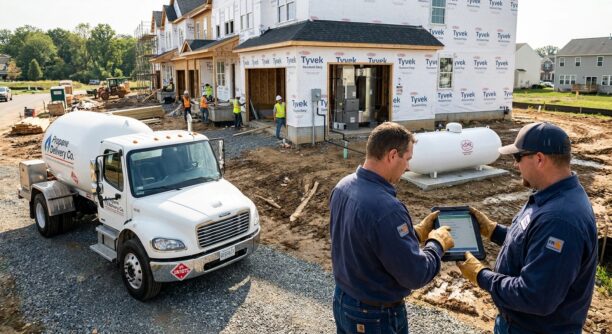
Builders and developers across Pennsylvania, New Jersey, Maryland, and Delaware are increasingly turning to propane as the preferred energy source for new residential and mixed-use developments. According to GasTec Online, the shift is being driven by lower infrastructure costs, high-efficiency equipment, and propane’s ability to provide reliable heating during grid outages.
For many suburban and ex-urban projects, extending natural gas mains can significantly increase development costs and delay construction schedules. Propane systems offer a more flexible alternative, with installation costs often running 30–40% lower than natural gas infrastructure in areas without existing pipeline access. That cost advantage is becoming especially important as developers face tighter margins and rising material costs.
Efficiency is another major selling point. Modern propane furnaces and water heaters now achieve AFUE ratings above 95%, giving builders access to compact, high-performance systems that compete directly with electric heat pumps. Propane-powered appliances also continue operating during electrical outages when paired with backup power systems, an advantage that gained attention this past winter with multiple storm disruptions throughout the Mid-Atlantic region.
To encourage adoption, the industry is expanding incentives through programs like the Propane Construction Rebate Program, which offers qualifying projects rebates of up to $5,000 per unit for energy-efficient propane installations. Support services such as design consultation, permitting assistance, and contractor training are also helping developers integrate propane systems more confidently into new construction plans.
For propane marketers, the trend creates a major opportunity to build long-term customer relationships at the development stage rather than competing for conversions later. Multi-family projects, mixed-use communities, and suburban housing developments can generate recurring residential demand for decades once propane infrastructure is established early in the construction process.
As builders continue prioritizing energy resilience, predictable installation costs, and high-efficiency systems, propane is positioning itself as a practical and scalable solution for the next wave of residential development.