
June 9, 2026
When Terminals Cap Loads Without Notice
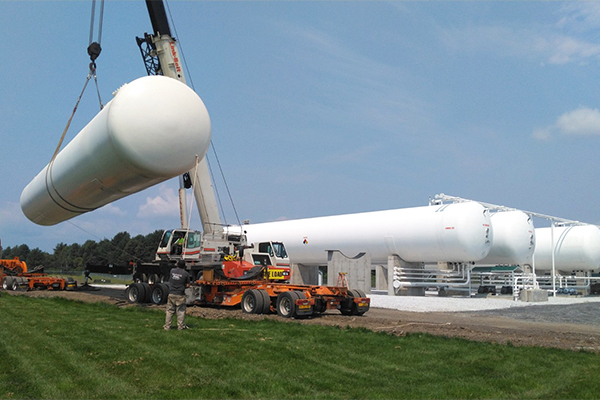
During peak demand, supply constraints rarely announce themselves clearly. One of the more disruptive realities for propane marketers is the quiet imposition of load caps at terminals, limits on how much product a carrier can lift per day or per trip, often communicated informally or only after drivers are already in line. These restrictions are not always publicly posted, and they can change quickly. For operators, the impact is immediate: delivery schedules break down, costs rise, and customer service risk increases. Managing through these conditions requires disciplined planning, tighter communication, and a shift from routine dispatching to contingency-based operations.
Why Load Caps Happen and Why They Stay Quiet
Load caps typically emerge when terminal throughput cannot keep pace with demand. This can be driven by pipeline constraints, reduced inventory positions, weather disruptions, or competing pull from export markets. When rack capacity is tight, terminal operators prioritize maintaining flow over maximizing individual lifts.
The reason these caps are often communicated quietly is operational, not strategic. Publicly posted limits can trigger panic buying behavior, increasing congestion and worsening the imbalance. Instead, limits are often enforced at the rack level or communicated through drivers, suppliers, or informal channels. For propane marketers, this creates an information gap. By the time dispatch becomes aware of a restriction, trucks may already be delayed or forced to leave with partial loads. That uncertainty complicates planning and increases reliance on reactive decision-making.
Dispatch Breakdowns Start at the Rack
When a terminal caps loads, dispatch assumptions collapse quickly. Routes built around full transports or bobtail replenishment cycles no longer hold. A truck expected to return with 9,000 gallons may arrive with significantly less, forcing mid-day adjustments.
This creates a cascade effect. Partial loads increase the number of trips required, which raises labor hours, fuel costs, and vehicle wear. At the same time, delivery windows tighten, especially for will-call customers or accounts nearing runout levels.
Companies without real-time communication between drivers and dispatch often fall behind the fastest. A delay or reduced load at the rack needs to trigger immediate route recalculation. Without that feedback loop, inefficiencies multiply throughout the day.
There is also a compliance and safety dimension. Drivers under pressure to complete routes after delays may rush procedures, increasing the risk of delivery errors or skipped safety steps. Operational stress at the rack does not stay at the rack; it carries through the entire delivery cycle.
Supplier Relationships and Allocation Reality
Not all customers at a terminal are treated equally during constrained periods. Suppliers often prioritize contract volumes, long-term relationships, or strategic accounts when allocating available product. Marketers operating primarily in the spot market or without firm supply agreements are more exposed to sudden limitations.
This is where supply strategy becomes critical. Relying on a single terminal or supplier increases vulnerability. Even companies with strong relationships can face reduced access if upstream constraints tighten. Multi-sourcing is not just a pricing strategy; it is a risk management tool.
However, shifting to alternate terminals during peak demand is not always straightforward. Distance, transportation cost, and driver hours-of-service limits all factor into whether an alternate supply point is viable. The reality is that access, not just price, determines performance during peak periods. Companies that treat supply access as a strategic priority tend to navigate these disruptions more effectively.
Inventory Planning Becomes a Defensive Strategy
Load caps expose weaknesses in inventory strategy. Companies operating with minimal storage or tight replenishment cycles have little buffer when supply access is restricted.
Bulk storage, where available, becomes a critical asset. Even a modest increase in on-site storage can provide the flexibility needed to maintain service during short-term disruptions. Pre-season fills and conservative inventory positioning also reduce dependence on daily rack access.
For companies without significant storage capacity, customer tank management becomes even more important. Increasing average tank levels before peak demand reduces the risk of runouts when deliveries are delayed. This is not just about supply continuity. Runouts during constrained periods carry higher operational and liability risk, particularly if emergency deliveries are required under difficult conditions.
Recommendations for Retailers
Companies that prepare for load caps before they occur are better positioned to maintain service and control costs. They should focus on the following:
1. Establish real-time rack communication protocols
Require drivers to report load restrictions immediately and equip dispatch to adjust routes in real time. Delayed information is the fastest way to lose efficiency.
2. Diversify supply points where feasible
Identify and qualify secondary terminals in advance, even if they are used infrequently. Understand travel time, costs, and access requirements before they are needed.
3. Adjust delivery thresholds ahead of peak demand
Raise minimum tank levels for deliveries going into high-demand periods to reduce reliance on last-minute rack access.
4. Strengthen supplier agreements and relationships
Secure contract volumes where possible and maintain consistent communication with suppliers to improve visibility during constrained conditions.
Planning for Constraints, Not Just Demand
Load caps are not an anomaly; they are a recurring feature of peak demand periods in a tight supply environment. The companies that perform best are not those that avoid constraints, but those that plan for them. By tightening communication, strengthening supply access, and adjusting inventory strategy, propane marketers can maintain service reliability even when rack conditions shift without warning. The ability to adapt quickly at the operational level often determines whether a company protects its margins and customer relationships or absorbs unnecessary cost and risk during the most critical weeks of the busy season.